


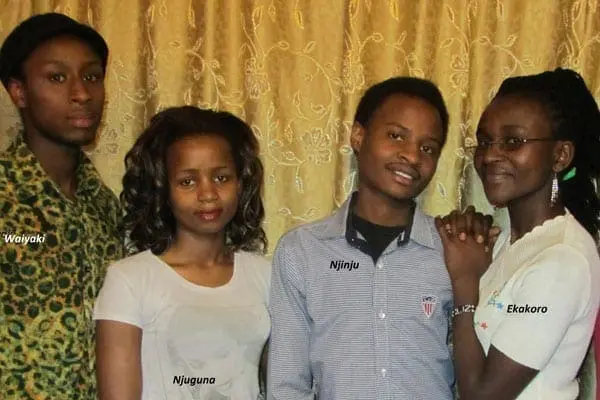
When Elizabeth Nabwire Ekakoro left Kenya on December 12, 2011 headed for further studies in Ukraine, her future could not have been any brighter.
She was one of the five Kenyan students selected that year to receive a scholarship. She beat out about 100 other applicants.
She was to pursue civil engineering at the Kiev National University of Construction and Architecture.
Three of her newly found colleagues were headed to the National Technical University of Ukraine and are also pursuing engineering degrees with Anthony Kiarie studying Mechanical Engineering, Simon Njinju (Chemical) and Samuel Erumu (Computer). One other student Everlyne Wamuyu is pursuing International Economics.
They all boarded the same flight. They bid their families goodbye, ready to start their new life.
Their parents were relieved that their only cost was paying for their children’s air tickets as the Ukrainian government was footing their tuition and the Kenyan government was catering for their upkeep.
When Elizabeth and her other colleagues arrived in the Ukrainian capital city of Kiev, they found out they could not enroll in university level classes. They had to complete their Ukrainian and Russian language classes first. This was the start of their challenges, but they did not mind this particular one.
What they did not anticipate was that their own government would turn its back on them once they departed.
BURSARY FUNDS
According to Elizabeth, the Ministry of Higher Education had promised them bursary funds upon arrival in Ukraine. The funds amounted to Sh60,000 annually. However, this was not to be, as the five students waited patiently for communication from the ministry. Unfortunately, none was forthcoming.
As panic set in, the students wrote numerous emails to the ministry but they did not receive a response.
Two years in, they are yet to receive any communication from the ministry regarding their funds.
After giving up on ever hearing back from the ministry, they turned for help from the Kenyan Embassy in Moscow. It has accreditation in Ukraine, Kazakhstan, and Belarus.
This too did not help. The embassy did not respond to any one of their emails for almost two years as well.
When the Daily Nation reached out to the Embassy for a comment, a spokesman for the Kenyan ambassador in Russia confirmed the interviews were conducted. They were for the Ukrainian Government scholarships 2011, and the students were selected.
Ms. Jennifer Njuguna, responding on behalf of the embassy, said only the Ministry of Education could explain the government’s policy on bursaries.
“The Cabinet Secretary and the Principal Secretary in the Ministry would be the right people to explain government policy on bursaries,” Ms. Njuguna told the Daily Nation. An email sent to the Ministry was not responded to.
As the students hold on to the hope that their government will not go back on its word, they endure miserable days. These are days they never thought they would see.
“We can only eat one meal a day here,” Elizabeth says. “Sometimes we will miss meals entirely to save the little we have.”
The Ukrainian government also offers stipends to students who excel in their classes achieving straight “A”s. The amount is about $80.
“It is very difficult to maintain an “A” because of the challenges we face,” says Simon. They have to use a foreign language in class. “Even when you are really lucky to get the stipend, the hostel alone is $50. This leaves you with $30 for all your other needs.”
The students also say they have been shut out of the international students’ community activities. They cannot participate financially. They say they have been completely isolated.
The only bright light in their otherwise tumultuous days is a church that they attend which holds sermons in English.
“The church sometimes comes together and gives us some little funding to sustain us,” says Elizabeth. “Without them, this life would be unbearable.”
For now the students hope that the ministry will come to their aid and remit the Sh300,000 they are owed. They all remember that President Uhuru made comments in Uganda stating that the diaspora is Kenya’s largest asset.
“Right now it does not feel like it. I am not even sure the government knows that we landed in Ukraine,” says Simon. “I remain hopeful though, I remain hopeful.”-nation.co.ke
Source-nation.co.ke