


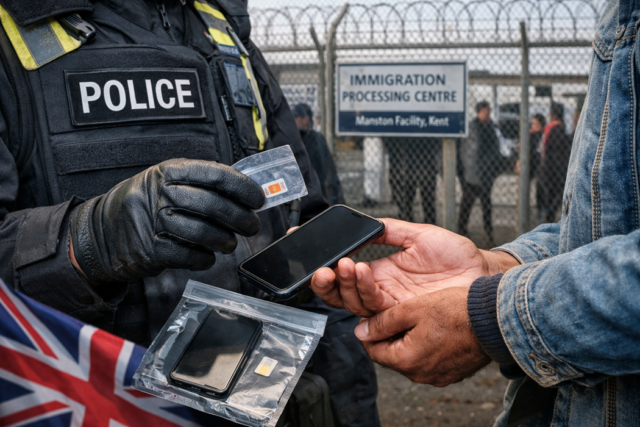
The United Kingdom has introduced new enforcement measures that allow police and immigration officers to seize mobile phones, SIM cards, and other electronic devices from migrants without making an arrest. This move could significantly affect undocumented migrants — including Kenyans and other foreign nationals living in the UK.
The policy, rolled out by the UK Home Office, gives law enforcement expanded powers to confiscate digital devices from individuals suspected of being in the country unlawfully. The seized phones are then taken to processing hubs such as the Manston processing centre in Kent. There, authorities use advanced technology to extract data for intelligence purposes.
According to the Home Office, the data will be used primarily to dismantle people-smuggling and human trafficking networks. The government says these networks rely heavily on encrypted messaging apps and mobile communications to operate.
“Law enforcement agencies now have the authority to seize electronic devices such as mobile phones and SIM cards from individuals in the country unlawfully, without the need for an arrest,” the Home Office said in a statement.
“This will support efforts to collect intelligence and enable the early identification and arrest of people smugglers.”
How the policy works
Under the new framework:
- Police and immigration officers can confiscate phones and SIM cards during encounters with suspected undocumented migrants.
- No formal arrest is required for seizure.
- Devices are transferred to digital processing centres where data is immediately downloaded and analysed.
- The return of seized phones depends on whether the data is considered relevant to criminal or immigration investigations.
Authorities have indicated that phones may be held for extended periods — or permanently — if they contain evidence linked to illegal migration, trafficking, or organized crime.
Concerns over privacy and rights
The policy has sparked concern among migrant rights groups, civil liberties organisations, and privacy advocates, who argue that it lowers the threshold for state surveillance and risks violating personal privacy and due process.
Critics say migrants may lose access to vital contacts, legal information, and personal documents stored on their devices. This could potentially isolate them from support networks, lawyers, and family.
“There is a serious risk of turning mobile phones into instruments of coercion rather than communication,” one rights advocate said. They warned that the policy could disproportionately impact vulnerable migrants, including asylum seekers and overstayers.
Implications for Kenyans and other migrants in the UK
For Kenyans living in the UK without legal status — or those with pending immigration cases — the new policy raises the stakes of everyday encounters with authorities. A routine stop could now result in loss of a phone. It could also result in personal data extraction and potential intelligence-led investigations.
Immigration experts advise migrants to:
- Seek legal advice if their device is confiscated.
- Understand their rights during police or immigration encounters.
- Avoid sharing sensitive information over unsecured platforms.
Government’s justification
The UK government insists the move is necessary to combat organized immigration crime. It says this crime has grown increasingly sophisticated and transnational.
By harvesting communication data early, authorities believe they can map smuggling routes, identify facilitators, and disrupt networks before migrants are exploited or endangered during illegal crossings.
A broader shift in immigration enforcement
The phone-seizure policy is part of a wider tightening of UK immigration enforcement that includes faster removals, expanded detention capacity, and new digital surveillance tools.
As migration remains a politically sensitive issue in Britain, the balance between national security and individual rights is likely to remain at the center of public debate.