


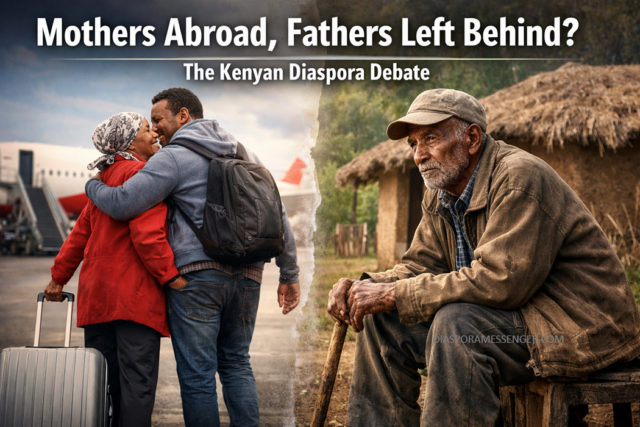
A heated discussion is unfolding across social media platforms about a sensitive and deeply personal issue within the Kenyan diaspora community — the growing trend of relocating mothers to cities like Nairobi or even abroad to countries such as the United States, while fathers remain behind in rural homes.
The debate has sparked emotional reactions, with many calling for an honest conversation about aging parents, family responsibility, and shifting cultural dynamics.
A Painful Question Many Are Asking
Kenyans online are asking a difficult but necessary question:
Why do we move our mothers to Nairobi or overseas, yet leave our fathers behind in the village?
These are the same fathers who woke before sunrise to work on the shamba, struggled to pay school fees during tough economic times, and silently carried family burdens without complaint. They labored to ensure their children had opportunities — opportunities that have now taken many sons and daughters abroad.
Yet, as some social media users point out, many fathers now sit outside rural homes, growing older each year, watching days pass slowly while waiting for phone calls, visits, or reminders that they are still valued and remembered.
Shifting Family Dynamics in the Kenyan Diaspora
The conversation touches on evolving family roles within Kenyan culture and the diaspora context. Traditionally, fathers have been viewed as strong, stoic providers — pillars of discipline and resilience. Mothers, on the other hand, are often associated with caregiving and emotional warmth.
Some argue that this perception influences decisions about relocation:
- Mothers are brought abroad to help care for grandchildren.
- Mothers are perceived as more adaptable to city or diaspora life.
- Fathers are assumed to be “strong enough” to remain behind.
- Cultural pride may discourage fathers from expressing loneliness.
But critics say strength does not cancel loneliness — and silence does not mean fathers are not hurting.
The Emotional Cost of Separation
Many Kenyans abroad admit the decision to relocate one parent often comes down to logistics, finances, immigration processes, and family needs. However, the emotional consequences are becoming harder to ignore.
Social media users have described older people fathers aging in isolation, separated not only from their children but from their spouses as well. Some call the trend “unconscionable,” arguing that removing a wife from her husband in old age can deepen loneliness and emotional distress.
The discussion has also extended to the United States, where some community members note that older men often face isolation unless they have strong family ties or supportive daughters who remain actively involved in their lives.
Is It Culture, Habit, or Oversight?
The debate raises broader questions:
- Do we unconsciously devalue the emotional needs of fathers?
- Is it easier to justify relocating mothers because of caregiving roles?
- Are fathers less likely to ask for help or companionship?
- Have modern migration patterns unintentionally weakened traditional family bonds?
Some argue that both parents deserve equal consideration. Success in the city or diaspora, they say, should not come at the cost of abandoning aging fathers to loneliness.
A Call for Balance and Reflection
At the heart of the debate is not blame — but reflection.
Yes, mothers deserve comfort and care. But so do fathers.
As many online commentators have urged: if your father is still alive, call him. Visit him. Include him. Ensure he feels valued and remembered. Because one day, that empty chair may remain empty forever.
The Kenyan diaspora community has long been celebrated for its strong family values and commitment to supporting relatives back home through remittances and development projects. But perhaps this conversation signals a new dimension of responsibility — emotional presence, not just financial support.
The ongoing social media debate is a reminder that as families evolve across borders, compassion and balance must remain at the center of decision-making.