

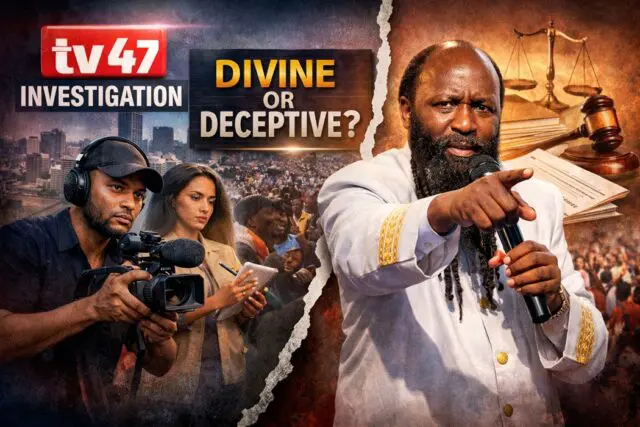
A heated public confrontation has erupted between the investigative journalists at TV47 and Prophet David Owuor, the leader of the Ministry of Repentance and Holiness. This is following the airing of a controversial documentary. The program questions the authenticity of high-profile miracle claims.
Inside the “Divine or Deceptive” Investigation
The documentary, titled Divine or Deceptive, aired in February 2026 and examined claims that individuals suffering from chronic and terminal illnesses—including HIV/AIDS and cancer—were healed during Prophet Owuor’s widely publicized crusades. Additionally, the program focused particularly on miracle testimonies presented at the ministry’s Nakuru crusade in late 2025. Some cases at that event were reportedly endorsed by medical professionals affiliated with the church.
TV47 journalists stated that the investigation sought independent medical verification of these claims. This raised concerns about whether some testimonies could withstand scientific scrutiny and established medical standards.
KSh 20,000 “Love Offering” and Ethical Concerns
According to the investigative team, Prophet Owuor sent KSh 20,000 to each member of the TV47 crew, describing the funds as a “divine gift” or “love offering.” The journalists publicly confirmed that they refunded the money. They cited the need to preserve editorial independence. In addition, they wanted to avoid any perception of influence or compromise.
The move was widely discussed online. In response, media ethics experts applauded the decision as a reinforcement of journalistic integrity amid increasing pressure on investigative reporting in Kenya.
Alleged Legal Threats and Pressure
TV47 further alleged that the Prophet’s legal representatives attempted to intimidate the station and halt the broadcast before it aired. While no court injunction was issued, reports of legal threats intensified the standoff and sparked broader debate about media freedom, religious influence, and accountability.
Churches and Medical Bodies Respond
In the wake of the exposé, the National Council of Churches of Kenya (NCCK) publicly distanced itself from the miracle claims highlighted in the documentary. The organization urged caution. It also encouraged responsible communication of faith-based testimonies.
Meanwhile, the Kenya Medical Practitioners and Dentists Council (KMPDC) announced investigations. They are examining whether any registered doctors breached professional ethics by validating or participating in the alleged healings without proper medical evidence.
Supporters Push Back
Followers of Prophet Owuor and members of the Repentance and Holiness Ministry strongly criticized TV47, accusing the station of bias and malice. However, supporters argued that spiritual matters cannot be subjected to scientific or media standards. They insisted that miracles are acts of faith beyond empirical measurement.
Social media platforms have since been flooded with polarized reactions—some praising the journalists for asking hard questions, others defending the Prophet as a genuine man of God facing persecution.
A Broader Debate on Faith, Media, and Accountability
The conflict has reignited a national conversation about the boundaries between faith and journalism. It has also focused discussion on the role of medical professionals in religious settings. Furthermore, the responsibility of media houses to investigate claims that may affect public health is under debate.
As investigations continue and public scrutiny grows, the TV47–Prophet David Owuor standoff remains one of Kenya’s most closely watched intersections of religion, media freedom, and ethical accountability.