


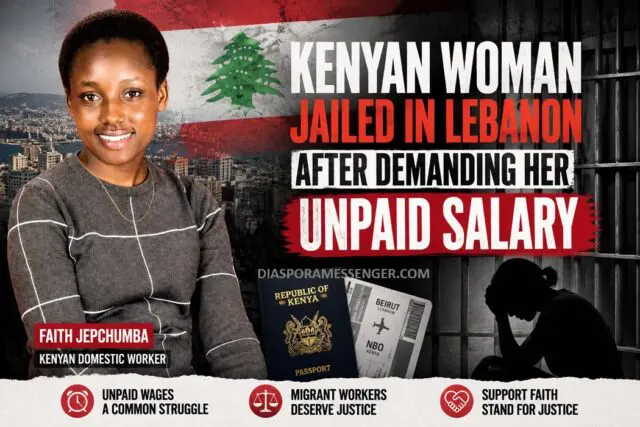
Heartbreaking Ordeal: Kenyan Woman Jailed in Lebanon After Demanding Her Unpaid Salary
A Kenyan domestic worker in Lebanon, identified as Faith Jepchumba, has reportedly been sentenced to nine months in prison following a dispute with her employer over unpaid wages.
According to reports, the disagreement arose after Faith demanded payment of the salary she had allegedly earned while working in Lebanon. The dispute reportedly escalated into legal proceedings, ultimately resulting in her imprisonment.
The case has generated widespread concern among Kenyans both at home and across the diaspora, with many expressing sympathy for Faith and calling for urgent intervention to safeguard the rights of Kenyan migrant workers employed abroad.
A Growing Concern for Kenyan Migrant Workers
Faith Jepchumba’s reported imprisonment has once again brought attention to the challenges faced by thousands of Kenyan domestic workers employed in Middle Eastern countries.
For years, migrant rights organizations have documented cases involving:
- Delayed or unpaid salaries.
- Contract violations.
- Excessive working hours.
- Restriction of movement.
- Confiscation of passports.
- Limited access to legal representation.
- Difficulties communicating with family members.
While many Kenyans successfully build better lives abroad, others encounter difficult situations that require diplomatic and legal intervention.
Family Appeals for Help
Faith’s family and close friends remain deeply worried about her welfare as she serves the reported prison sentence far from home.
They are hoping for support from the Kenyan government, the Kenyan Embassy, humanitarian organizations, and well-wishers to help ensure she receives fair legal representation and any available consular assistance.
The emotional toll on migrant workers and their families often extends beyond financial hardship, affecting mental health and family relationships.
Calls for Justice
The reported case has sparked conversations on social media, with many Kenyans urging authorities to strengthen protections for citizens working overseas.
Human rights advocates continue to emphasize the importance of:
- Enforcing fair employment contracts.
- Ensuring timely payment of wages.
- Providing access to legal assistance.
- Protecting workers from exploitation.
- Strengthening bilateral labour agreements.
- Offering emergency support through Kenyan embassies.
Many believe stronger monitoring systems and improved diplomatic support could help prevent similar situations from affecting other Kenyans seeking employment abroad.
Kenya’s Labour Migration Programme
Over the past several years, thousands of Kenyans have relocated to countries across the Middle East, Europe, North America, and Asia in search of employment opportunities.
Labour migration has become an important source of income for many families through remittances sent back to Kenya. However, experts continue to stress the need for proper recruitment processes, worker education, and stronger protections to ensure Kenyans are treated fairly wherever they work.
Faith Jepchumba’s reported imprisonment serves as another reminder of the risks that some migrant workers continue to face despite leaving home in pursuit of better economic opportunities.
Conclusion
As Faith Jepchumba’s reported legal battle unfolds, many Kenyans are hoping for a fair resolution and renewed attention to the welfare of migrant workers overseas.
Her case has reignited important conversations about workers’ rights, employer accountability, and the responsibility of governments to protect citizens working abroad. It also underscores the need for stronger legal safeguards and continued advocacy to ensure Kenyan migrant workers are treated with dignity, respect, and fairness wherever they are employed.