

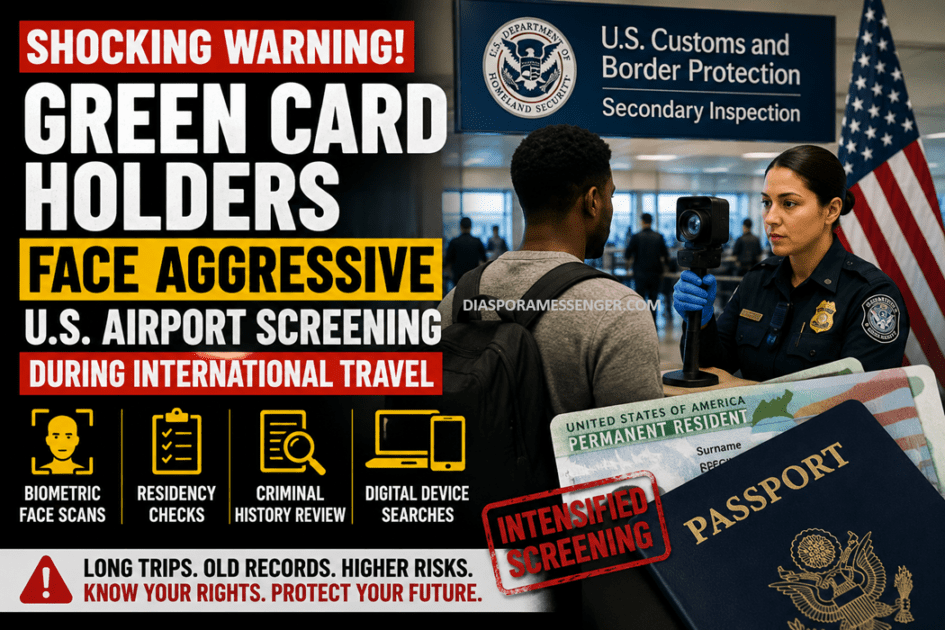
Lawful Permanent Residents, commonly known as green card holders, are facing intensified scrutiny when returning to the United States after traveling abroad. Immigration attorneys and immigrant advocacy groups are warning that U.S. Customs and Border Protection (CBP) officers are conducting stricter inspections, prolonged questioning, biometric tracking, and deeper reviews of travelers’ immigration histories at airports and border entry points.
For many members of the Kenyan diaspora and other immigrant communities living in America, these developments have created growing anxiety over international travel, especially for those with past legal issues, long stays abroad, or uncertain immigration records.
The heightened enforcement comes amid broader federal immigration crackdowns targeting both temporary visa holders and lawful permanent residents.
Increased Screening for Green Card Holders Returning to the U.S.
According to recent reports, green card holders reentering the United States are now experiencing:
- Longer secondary inspections at airports
- Mandatory facial recognition biometric scans
- Detailed questioning about travel history
- Scrutiny over employment and residency ties
- Increased digital device searches
- Reviews of past arrests, dismissals, and criminal records
Immigration officers are particularly focusing on whether permanent residents may have abandoned their U.S. residency by spending extended periods outside the country.
Long Trips Abroad Could Trigger Residency Abandonment Concerns
Under U.S. immigration law, permanent residents are expected to maintain the United States as their primary home.
CBP officers are reportedly applying stricter interpretations of residency abandonment rules, especially for travelers who remain outside the country for more than six months.
A prolonged absence can raise red flags and may result in:
- Intense questioning at ports of entry
- Requests to voluntarily surrender a green card
- Referral to immigration court proceedings
- Additional monitoring during future travel
Travelers are increasingly being asked to prove they maintain active ties to the United States, including employment, housing, taxes, and family connections.
Decades-Old Criminal Records Now Under Heavy Review
Another major concern involves enhanced vetting of criminal histories.
Immigration attorneys say even old arrests, dismissed charges, expunged cases, or minor offenses that previously caused little concern are now attracting greater scrutiny during reentry inspections.
Some green card holders have reportedly faced:
- Detention at airports
- Delayed admission into the U.S.
- Secondary inspection referrals
- Possible deportation proceedings
Legal experts warn that lawful permanent residents with any criminal history should seek legal advice before international travel.
Mandatory Facial Recognition and Biometric Tracking
The U.S. government has significantly expanded biometric surveillance systems at airports and border checkpoints.
Green card holders and other non-citizens are now routinely subjected to facial recognition scans both when departing and entering the United States.
The biometric system helps immigration authorities:
- Track international travel patterns
- Verify traveler identities
- Monitor immigration compliance
- Create digital travel timelines
Privacy advocates have raised concerns about the growing use of biometric data collection and digital surveillance at ports of entry.
Digital Device Searches Becoming More Common
CBP officers are also increasingly examining electronic devices such as:
- Mobile phones
- Laptops
- Tablets
- Social media activity
These searches may be used to evaluate:
- Residency intent
- Travel patterns
- Employment connections abroad
- Potential immigration inconsistencies
While lawful permanent residents retain constitutional protections, refusing to cooperate with inspections may result in prolonged questioning and delays.
How Green Card Holders Can Protect Themselves Before Traveling
Immigration experts recommend several precautions for lawful permanent residents planning international travel.
Keep International Trips Short
Whenever possible, limit travel outside the United States to less than six months to reduce concerns about residency abandonment.
Carry Proof of U.S. Residency
Travelers should bring documents demonstrating strong ties to the United States, including:
- Recent tax returns
- Employment records
- Pay stubs
- Lease agreements
- Mortgage statements
- Utility bills
- Bank statements
Consult an Immigration Attorney Before Traveling
Green card holders with:
- Arrest records
- Pending legal issues
- Conditional residency
- Extended travel plans
should seek professional immigration legal advice before leaving the country.
Know Your Rights at the Border
Lawful permanent residents generally only need to confirm:
- Their identity
- Their immigration status
However, border officers still possess broad authority during inspections, and travelers should remain calm, respectful, and prepared for additional screening.
Growing Anxiety Within the Diaspora Community
The intensified border enforcement measures are creating concern among many immigrants who frequently travel abroad to visit family, attend funerals, invest in businesses, or manage property overseas.
For the Kenyan diaspora community in the United States, the tougher screening environment highlights the importance of maintaining proper immigration records and understanding the risks associated with extended international travel.
As immigration enforcement policies continue evolving, green card holders are being urged to remain informed, legally prepared, and cautious when planning overseas trips.

Shocking Alert: Green Card Holders Face US Airport Screening