

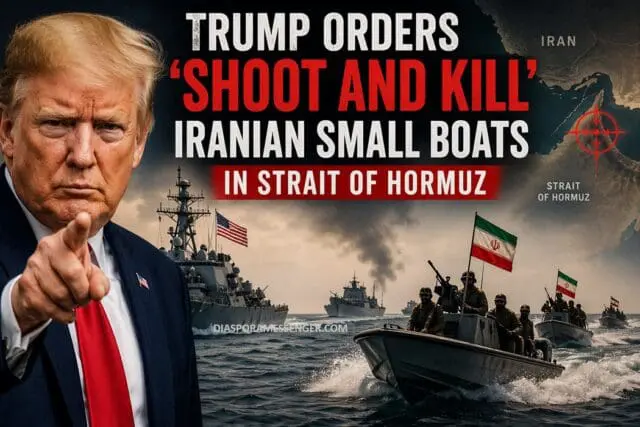
Trump Orders ‘Shoot and Kill’ Iranian Boats in Strait of Hormuz, Escalating Global Tensions
April 23, 2026 — U.S. President Donald Trump has issued a dramatic and controversial military directive, ordering the United States Navy to “shoot and kill” any Iranian small boats suspected of laying mines in the strategic Strait of Hormuz.
The order, announced Thursday morning via social media, marks a sharp escalation in the already volatile maritime standoff between the United States and Iran, raising fears of a broader regional conflict with global economic implications.
What Trump’s Order Says
In his statement, Trump declared:
“I have ordered the United States Navy to shoot and kill any boat, small boats though they may be… that is putting mines in the waters of the Strait of Hormuz. There is to be no hesitation.”
The directive signals a zero-tolerance policy toward suspected Iranian naval activities, particularly those linked to mine-laying operations that could disrupt international shipping lanes.
Additionally, Trump ordered U.S. forces to intensify mine-clearing operations, directing the Navy to scale up efforts at a “tripled up level.”
Rising Tensions in the Gulf
The announcement follows a series of alarming developments involving Iran’s elite Islamic Revolutionary Guard Corps (IRGC):
- Reports indicate IRGC forces attacked three cargo vessels in the Strait.
- Two ships — Francesca and Epaminondas — were allegedly seized by Iranian forces.
- Maritime security alerts suggest increased harassment of commercial shipping.
In a parallel operation, U.S. forces reportedly boarded and seized the tanker Majestic X in the Indian Ocean, citing violations related to sanctioned Iranian oil smuggling.
Strategic Importance of the Strait of Hormuz
The Strait of Hormuz is one of the world’s most critical energy corridors:
- Roughly 20% of global oil and natural gas shipments pass through the narrow waterway.
- It serves as a vital link between Middle Eastern producers and global markets, including the United States, Europe, and Asia.
- Any disruption could trigger sharp spikes in global energy prices and destabilize economies worldwide.
The United States has maintained a naval blockade targeting Iranian-linked vessels since April 13, 2026, following the collapse of diplomatic talks in Islamabad.
Global and Diaspora Impact
For the Kenyan diaspora and global migrant communities, the escalating tensions carry significant indirect consequences:
- Fuel price volatility could increase the cost of living across countries where diaspora populations reside.
- Shipping disruptions may impact imports, remittances, and supply chains.
- Heightened geopolitical instability could influence immigration policies, job markets, and economic conditions in host countries like the United States and Europe.
International Reaction and Risks
Security analysts warn that Trump’s directive could:
- Lead to direct military confrontation between U.S. and Iranian forces.
- Trigger retaliatory actions from Iran, including further seizures or attacks on vessels.
- Draw in regional and global powers, escalating into a broader conflict in the Middle East.
Diplomatic channels remain strained, with no immediate signs of de-escalation.
What Happens Next?
With U.S. naval forces now operating under aggressive engagement rules, the situation in the Strait of Hormuz remains highly fluid and dangerous.
The coming days will be critical in determining whether this latest move leads to deterrence or a full-scale maritime conflict — a development that could reshape global energy markets and international security dynamics.
Conclusion
The directive issued by Donald Trump marks a critical turning point in U.S.–Iran relations, pushing an already tense maritime standoff in the Strait of Hormuz closer to open confrontation. With global energy routes at stake and military forces on heightened alert, the risk of escalation is real and immediate.
As the situation unfolds, the world will be watching closely to see whether this show of force leads to deterrence or triggers a wider conflict. For global economies—and diaspora communities who often feel the ripple effects first—stability in the Gulf remains essential. The coming days will be decisive in shaping not just regional security, but the broader geopolitical and economic landscape.