


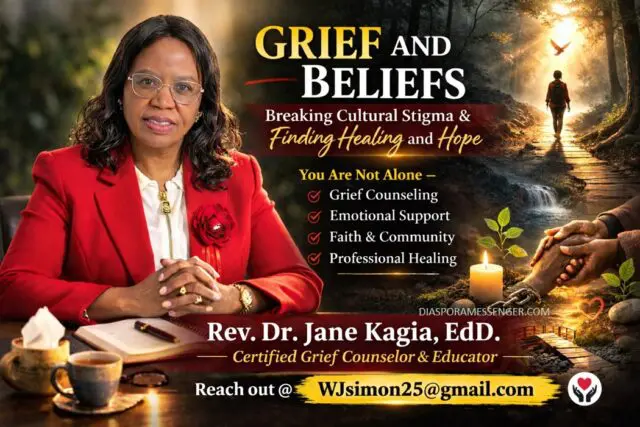
Grief can feel like walking through a dark, foreboding forest — a place no one willingly enters. Yet in life, grief is unavoidable. It does not discriminate. Regardless of age, culture, gender, or social status, every human being will eventually find themselves navigating the shadowy terrain of loss.
That forest is dense and confusing. There are no clear paths. Emotional “wild animals” of fear, anxiety, and despair lurk in unexpected places. There are treacherous waters of loneliness and lagoons of silence that threaten to swallow hope. Grief is not a journey anyone should walk alone.
In those difficult moments, we must hold on to what gives us hope — faith, community, professional guidance, and safe spaces where emotions can be expressed freely without judgment.
Grief Is More Than Death
When we talk about grief, we often think only of death. However, grief has many forms and layers:
- Loss of employment
- Retirement and identity shifts
- Aging and health changes
- Children leaving home (empty nest syndrome)
- Divorce and separation
- Financial instability
- Loss of stability or security
The COVID-19 pandemic in 2022 magnified these realities. Silence, isolation, and uncertainty intensified grief worldwide. Many suffered quietly.
Grief is not a one-size-fits-all experience. Different cultures express grief differently. There is no “right” or “wrong” way to grieve. What matters most is that it is processed in a healthy way.
Faith and Human Connection: Why Both Matter
Sometimes you may hear someone say, “All I need is God.”
Faith is powerful. Spiritual belief can anchor us in storms. However, God also gave us community. Human connection is not a replacement for faith — it is often an extension of it.
We need safe spaces where we can:
- Vent emotions
- Express anger and confusion
- Decipher fears
- Process trauma
- Receive compassionate guidance
No one should emotionally suffocate under the weight of grief.
Cultural Stigma and Mental Health in Our Communities
In many communities, including African and diaspora communities, cultural taboos often prevent open emotional expression. The belief that “what happens in the house stays in the house” discourages people from seeking help.
Unfortunately, seeking professional counseling is sometimes viewed as:
- A sign of weakness
- Lack of faith
- Exposure of family shame
- Adoption of “Western” ideas
Men, in particular, face intense pressure to remain stoic and emotionally resilient. Admitting emotional struggle may be perceived as failure. Women may have slightly more room to express emotion but can still face judgment when discussing marital or family challenges.
Sensitive topics like domestic violence, trauma, and marital conflict are often silenced. This stigma leaves many grievers isolated and vulnerable.
The Risks of Unprocessed Grief
When grief is ignored or suppressed, it does not disappear. Instead, it can manifest as:
- Depression
- Anxiety
- Substance abuse
- Emotional withdrawal
- Anger and irritability
- Physical health problems
Too often, individuals seek counseling only when symptoms become severe or life-disrupting.
While faith-based support is valuable, it should not replace professional mental health care when needed. Professional grief counseling does not weaken faith. It strengthens resilience and equips individuals with healthy coping tools.
Seeking Professional Grief Counseling
Professional grief counseling provides:
- Confidential and non-judgmental support
- Healthy coping strategies
- Emotional processing tools
- Trauma-informed guidance
- Long-term healing pathways
Grief counselors are trained to walk with individuals through loss without minimizing their pain or imposing solutions.
If you are feeling lost in your grief, you do not have to suffer in quiet desperation. There is help. There is hope.
You Do Not Have to Walk Alone
If you need a safe space to process your fears, emotions, and life transitions, professional support is available.
As a certified grief counselor and educator, I am here to walk alongside you through the murky forest of grief. Healing is possible. Restoration is possible.
Reach out. Your story matters.
By Rev. Dr. Jane Kagia, EdD., BCC., GC-C., CGE
Certified Grief Counselor & Educator
Contact By Rev. Dr. Jane Kagia @WJsimon25@gmail.com