


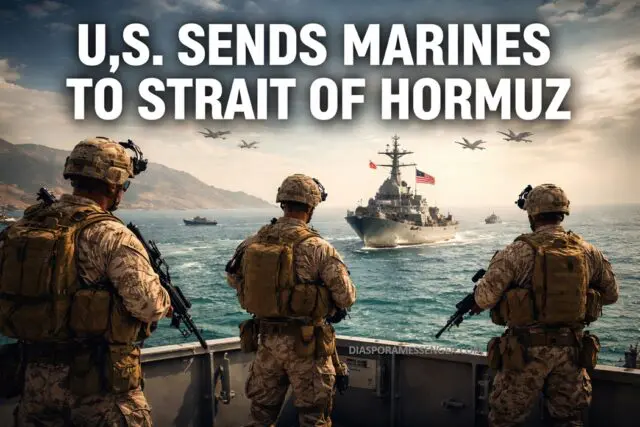
In a major escalation of the ongoing conflict in the Middle East, the United States has ordered the deployment of approximately 2,500 Marines to the Strait of Hormuz. The move aims to break an Iranian naval blockade that has paralyzed global energy markets and sent oil prices soaring.
The 31st MEU and USS Tripoli Head to the Gulf
The deployment is centered on the 31st Marine Expeditionary Unit (MEU), an elite rapid-response force. Departing from their base in Okinawa, Japan, the Marines are currently in transit aboard the USS Tripoli (LHA-7).
The Tripoli, a state-of-the-art amphibious assault ship, serves as a “lightning carrier.” It carries a lethal contingent of F-35B stealth fighters, MV-22 Osprey tilt-rotor aircraft, and attack helicopters, providing the U.S. military with versatile options for both air superiority and amphibious raids.
Mission Objectives: Ending the Blockade
The primary mission of the 31st MEU is to reopen the Strait of Hormuz, a narrow chokepoint through which 20% of the world’s oil passes. Recent Iranian activity, including the deployment of naval mines and suicide drones, has effectively halted commercial shipping.
Strategic goals for the deployment include:
- Amphibious Raids: Targeting Iranian fast-boat launch sites and missile batteries on disputed islands.
- Tanker Escorts: Providing armed protection for commercial oil tankers to prevent further seizures.
- Rapid Response: Serving as a “floater” force capable of conducting civilian evacuations or counter-terrorism operations as the regional war evolves.
Global Economic Impact
The maritime standoff has triggered a global energy crisis. Following the reported destruction of Iran’s Kharg Island oil terminal and the subsequent blockade, crude oil prices have surged past $100 per barrel. The White House has signaled that the Marines are a necessary “stabilizing force” to restore the flow of global commerce.
Tensions at a Breaking Point
This deployment marks the third week of intensified hostilities between the U.S., Israel, and Iran. With the 31st MEU expected to arrive in the region within 10 to 15 days, military analysts warn that the risk of a direct naval confrontation in the Persian Gulf is at its highest level in decades.