


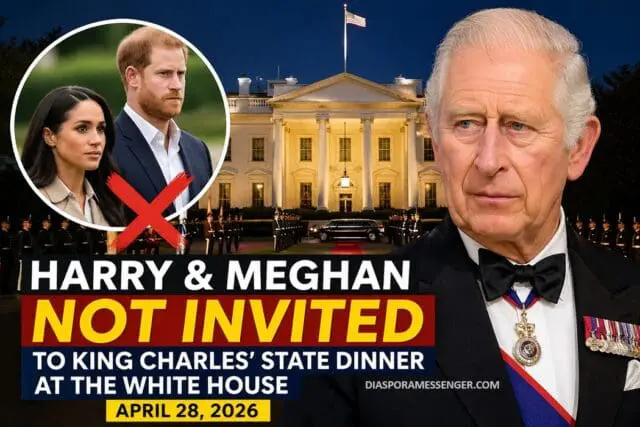
Prince Harry and Meghan Markle Not Invited to King Charles III’s White House State Dinner
In a highly anticipated diplomatic event, King Charles III was honored at a state dinner hosted at the White House on April 28, 2026. However, one notable absence sparked widespread discussion across global media: Prince Harry and Meghan Markle were not included on the official guest list.
The decision has reignited conversations about the Sussexes’ evolving role within the British monarchy and their relationship with official state affairs—especially during high-profile international visits involving leaders such as Donald Trump and Melania Trump.
Why Harry and Meghan Were Not Invited
1. Their Non-Working Royal Status
Since stepping back from royal duties in 2020, Prince Harry and Meghan Markle are no longer considered “working royals.” This distinction plays a major role in determining who participates in official diplomatic engagements.
State visits are typically reserved for senior members of the royal family actively representing the Crown. Including the Sussexes would have required a specific request from Buckingham Palace—one that reportedly was never made.
2. Avoiding Media Distractions
Royal insiders suggest that concerns over “optics” heavily influenced the decision. Any public appearance involving Prince Harry and King Charles III would likely dominate headlines, shifting focus away from the diplomatic mission.
The White House event was carefully designed to highlight U.S.-UK relations and commemorate the 250th anniversary of American independence—not family dynamics within the monarchy.
3. A “Mutual Understanding”
Sources close to the situation indicate there was a quiet, mutual agreement that Prince Harry would not seek to meet his father during the tightly scheduled four-day state visit.
This understanding reflects a broader effort by both sides to maintain boundaries between personal family matters and official state responsibilities.
Curated Guest List for a Diplomatic Event
The guest list for events surrounding the royal visit—including receptions tied to The King’s Trust—was reportedly curated by influential figures such as Anna Wintour and Martha Stewart.
Their selections focused on cultural leaders, philanthropists, and key figures aligned with the purpose of the visit. The absence of the Sussexes reinforces the intention to keep the spotlight on diplomacy, trade, and historic ties between the United States and the United Kingdom.
Focus of the State Visit
The 2026 state visit carries significant symbolic weight, marking 250 years since American independence. Hosted at the White House, the event underscores the continued strength of transatlantic relations between the two nations.
Key themes include:
- Strengthening economic and trade partnerships
- Cultural exchange and shared democratic values
- Strategic global cooperation
By maintaining a tightly controlled guest list, organizers ensured that the narrative remained centered on these priorities.
Public Reaction and Media Buzz
News of Prince Harry and Meghan Markle’s exclusion quickly went viral, with commentators offering mixed reactions:
- Supporters argue the decision was appropriate given their non-official status
- Critics view it as another sign of ongoing tensions within the royal family
- Neutral observers see it as standard diplomatic protocol rather than a personal snub
Regardless of interpretation, the situation highlights the complex balance between celebrity, monarchy, and international diplomacy in the modern era.
What This Means for the Sussexes
For Prince Harry and Meghan Markle, the decision reinforces their current position outside formal royal structures. While they remain globally influential figures—particularly in media, philanthropy, and advocacy—their role in official state functions remains limited.
Their absence also signals a continued separation between personal family relationships and institutional responsibilities within the monarchy.
Conclusion
The absence of Prince Harry and Meghan Markle from King Charles III’s White House state dinner was not accidental—it was a deliberate, strategic choice aimed at preserving the integrity of a major diplomatic occasion.
As the British royal family continues to adapt to modern realities, moments like these illustrate how tradition, protocol, and media dynamics intersect on the global stage.