


In a deeply emotional week for Kenya, the nation was plunged into mourning following the passing of former Prime Minister Raila Odinga. As tributes poured in from across the political divide and beyond, a different kind of activity was unfolding quietly in the corridors of power.
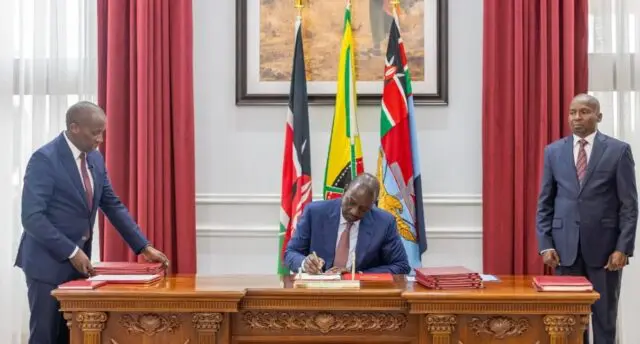
Reports from October 2025 indicate that President William Ruto signed eight parliamentary bills into law around the same time as Odinga’s death. The timing of these actions has sparked public outrage and accusations of political opportunism, with critics saying the government took advantage of a national tragedy to push through controversial legislation with minimal scrutiny.
The Death of Raila Odinga: A Nation in Mourning
Raila Odinga, a towering figure in Kenyan politics and a key player in the country’s democratic evolution, passed away in mid-October 2025. His death triggered a rare moment of national unity, with mourning ceremonies held across the country and political leaders suspending activities to pay their respects.
From Nairobi to Kisumu, Kenyans gathered in large numbers to honor the man many called “Baba.” He was remembered for his decades-long fight for multi-party democracy, his role in major constitutional reforms, and his persistent challenge to power despite repeated electoral defeats.
The government declared a period of national mourning, during which flags were flown at half-mast and public events were scaled back. However, not all arms of government slowed down.
Bills Signed During the Mourning Period
While Kenyans were in mourning, President Ruto signed the following eight bills into law around October 15, 2025:
National Land Commission (Amendment) Bill, 2023
This amendment redefines the powers of the commission in relation to land acquisition and compensation. Critics argue it may weaken safeguards against compulsory land acquisitions.
Land (Amendment) Bill, 2024
A bill with implications for private land ownership and titling. Land rights activists warn it could lead to increased land disputes.
Wildlife (Amendment) Bill, 2023
Updates to wildlife conservation policies, with concerns raised about its impact on indigenous communities and wildlife corridor protections.
Computer Misuse and Cybercrimes (Amendment) Bill, 2024
Perhaps the most controversial of the eight, this bill has been heavily criticized for allegedly granting the government broad powers to shut down social media accounts under the guise of preventing cybercrime. Civil society groups argue it poses a serious threat to free speech and digital rights.
National Police Service Commission (Amendment) Bill, 2024
Adjustments to the structure and oversight of the police service. Analysts say the changes could further centralize control and weaken police accountability.
Air Passenger Service Charge (Amendment) Bill, 2025
Increases levies on airline tickets, a move critics say will burden travelers and hurt tourism recovery efforts.
Virtual Asset Service Providers Bill, 2025
Introduces a regulatory framework for digital assets such as cryptocurrencies. While some see it as a step toward modernizing the economy, others fear overregulation could stifle innovation.
Privatisation Bill, 2025
Another lightning rod for criticism, this bill streamlines the process of privatizing state-owned enterprises. Opponents claim it opens the door to the sale of critical national assets without adequate public oversight.
Public Reaction and Political Fallout
The backlash was swift. Opposition leaders, civil rights groups, and many ordinary Kenyans accused the Ruto administration of disrespecting the national mourning period and using it as a political cover.
“A time of mourning should not be a time for backdoor policymaking,” one opposition senator said in a statement. “The President should have suspended the signing of contentious bills until the country had time to grieve.”
Others questioned the intent behind signing controversial bills — particularly the cybercrimes and privatisation bills — at a time when the media and public were preoccupied with Odinga’s death.
Supporters of the government, however, defended the move, insisting that legislative processes must continue regardless of emotional moments. A senior government official argued that the bills had already passed all necessary parliamentary stages and delaying their assent would have been “irresponsible.”
Conclusion: Politics Amid Grief
The decision by President Ruto to sign these bills during a time of national grief has cast a shadow over what should have been a unified moment of remembrance. As Kenyans mourn the loss of a political giant, the controversy has only deepened the country’s political divide.
Whether intentional or merely a matter of timing, the signing of these laws during the mourning period has fueled suspicions and debates about governance, transparency, and respect for public sentiment.
As Kenya moves forward, questions remain: Was this a strategic political move or just unfortunate timing? And what will be the long-term impact of these new laws on Kenya’s democracy?
Raila’s Death: The Bills that Ruto Signed into Law During Mourning
Follow our WhatsApp Channel and X Account for news updates.