


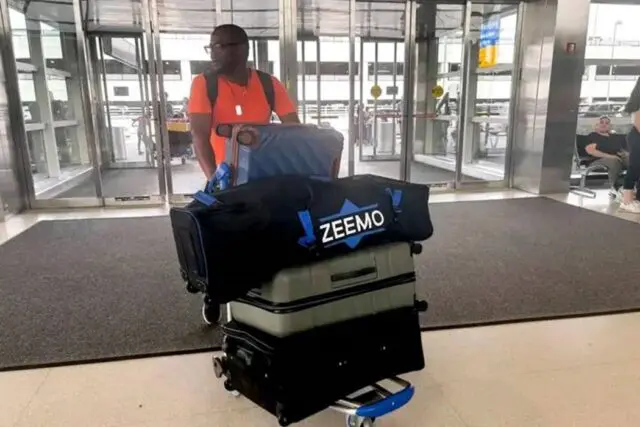
NAIROBI, Kenya — After 16 years of life in the United States, Samuel Kangethe, a Kenyan immigrant who once called Michigan home, made the heart-wrenching choice to return to Kenya voluntarily — a personal self-deportation rooted in dignity, faith, and family.
Kangethe’s story is not one of defeat, but of reclaiming control over his destiny. “I decided I would rather take myself out rather than arrive at an airport in shackles,” he told reporters. “I wanted to come home with my dignity, in one piece.”
A Long Journey from Student to Survivor
Born and raised in Kenya, Sam Kangethe moved to the U.S. in 2009 on a student visa, pursuing higher education in accounting and finance. He earned both a Bachelor’s and Master’s degree, later working as a state accountant in Michigan.
Over the years, he built a life — and a family — in America. He married twice and became the father of a blended family, balancing work, school, and parenting. But his dream of permanent residency was derailed after immigration officials flagged his first marriage as fraudulent, a claim he has long disputed.
That single event placed him in immigration limbo. Unable to renew his visa or legalize his stay, Kangethe spent years fighting to stay in the country. “I spent thousands of dollars on attorneys,” he said. “Every door I knocked on closed.”
Facing a Harsh Reality
By early 2025, as immigration enforcement intensified and deportation raids surged across several U.S. states, Kangethe and his wife Latavia faced a difficult decision. After countless late-night discussions filled with fear and uncertainty, they agreed: it was time for him to leave voluntarily.
He resigned from his accounting position and spent his final months preparing his family emotionally. There were long dinners, board games, and quiet moments filled with laughter and tears.
On August 17, 2025, he quietly said goodbye from his home — avoiding the public heartbreak of an airport farewell. “I wanted my last memory in the U.S. to be peace, not handcuffs,” he explained.
Coming Home to Kenya
Now back in Kenya, Kangethe is focused on rebuilding his life. He has been reconnecting with relatives, visiting his late father’s grave, and searching for accounting jobs in Nairobi. Despite the economic challenges, he describes a newfound sense of peace.
“I feel free now,” he said. “My family can reach me anytime. There, I was just surviving — hoping somebody wouldn’t pick me up. That’s not living.”
Though separated from his wife and children, Kangethe remains optimistic. He continues to fight his U.S. immigration case from abroad and plans to attend a court hearing via Zoom in January 2026. His hope: one day, he can reunite with his family legally and permanently.
A Story of Dignity and Resilience
Kangethe’s self-deportation story highlights the emotional toll of America’s complex immigration system, but also the resilience of those who face it. For him, the choice to return was not surrender — it was strength.
“I didn’t want my children to remember me as someone dragged away,” he said. “I wanted them to see that even when life breaks you down, you can still walk away with your dignity intact.”
Follow our WhatsApp Channel and X Account for news updates.