

Ultimate Guide to U.S. Student Visa Interview Preparation: Lessons from a Kenyan Student’s Journey
For thousands of Kenyan students, receiving admission to an American university is only one step toward achieving their dream of studying in the United States. The next hurdle—the U.S. student visa interview—often becomes the most stressful part of the entire process.
A visa interview typically lasts only a few minutes, yet it can determine whether months or even years of planning finally pay off. From university applications and financial documentation to preparing for life abroad, everything comes down to a brief conversation with a U.S. consular officer.
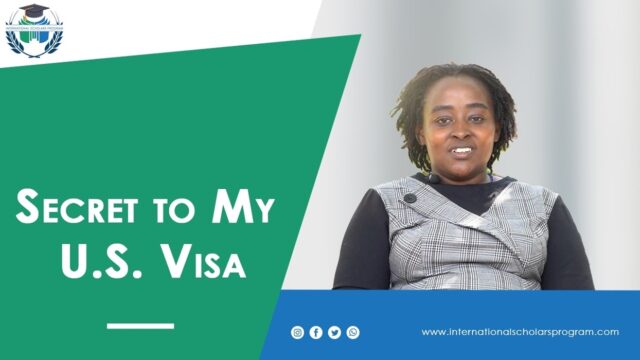
For Catherine Mutambu, that interview became a powerful lesson in resilience. Although her first attempt resulted in a visa refusal, she refused to let disappointment define her future. Instead, she used the experience to prepare more effectively, eventually strengthening her confidence and moving closer to her dream of pursuing a master’s degree at the University of Delaware.
Her story offers valuable lessons for Kenyan students and the wider diaspora community preparing for a U.S. student visa interview.
Understanding the U.S. Student Visa Process
After securing admission to the University of Delaware, Catherine began the standard F-1 student visa application process.
Like all prospective international students, she:
- Completed the DS-160 Online Nonimmigrant Visa Application
- Paid the required visa fees
- Scheduled an interview at the U.S. Embassy in Nairobi
- Organized supporting academic and financial documents
However, Catherine understood that paperwork alone would not guarantee success. She knew preparation for the interview itself was equally important.
How Proper Interview Preparation Makes a Difference
Before attending her interview, Catherine received structured guidance through the International Scholars Program (ISP).
Her preparation included:
- Reviewing detailed visa interview guides
- Studying interview experiences from successful applicants
- Watching embassy interview preparation videos
- Participating in realistic mock interviews
- Learning how U.S. consular officers evaluate applicants
Rather than memorizing answers, the goal was to understand the interview process and communicate naturally and confidently.
According to Catherine, the preparation helped reduce uncertainty and gave her a better understanding of the types of questions applicants commonly face.
The First Interview: When Preparation Meets Pressure
Despite preparing extensively, Catherine admits that nerves took over on interview day.
During her interview, the consular officer asked questions about:
- Why she selected the University of Delaware
- Her work as a business analyst
- Her future academic goals
- How she intended to finance her studies
- Her plans after graduation
Catherine explained that she intended to pursue a master’s degree aligned with her professional ambitions. She also discussed her education loan and her chilli farming business, which she planned to use to help repay the loan after completing her studies.
Unfortunately, despite answering the questions, her visa application was refused.
For many applicants, that outcome might have marked the end of the journey.
For Catherine, it became the beginning of a better preparation strategy.
Turning a Visa Refusal into an Opportunity
Instead of becoming discouraged, Catherine immediately documented everything she could remember from the interview.
Together with her advisors, she carefully reviewed:
- The questions she had been asked
- Her responses
- Areas where she appeared less confident
- Opportunities to communicate more clearly
The review revealed an important lesson.
Her knowledge wasn’t lacking.
Her confidence was.
Recognizing this allowed her to shift her focus from simply knowing the answers to delivering them calmly and confidently.
Why Confidence Matters During an F-1 Visa Interview
Several months later, Catherine began preparing again.
This time she concentrated on:
- Additional mock interviews
- Speaking naturally instead of memorizing responses
- Managing interview anxiety
- Practicing eye contact and clear communication
- Remaining calm under pressure
She realized that confidence is often just as important as preparation.
While every visa application is evaluated individually, applicants who clearly explain their academic plans, financial arrangements, and future goals often communicate greater credibility.
Common U.S. Student Visa Interview Questions
Although every interview is unique, applicants should expect questions covering several key areas.
Typical questions include:
- Why did you choose this university?
- Why do you want to study in the United States?
- Why did you choose your program?
- Who will finance your education?
- What do your parents or sponsors do?
- What are your career plans after graduation?
- Why not study in your home country?
- Have you traveled internationally before?
The objective is not to memorize responses but to answer honestly, confidently, and consistently.
Expert Advice for Kenyan Students Planning to Study in the USA
Education advisors emphasize that successful applicants usually demonstrate three important qualities:
1. Clear Academic Goals
Students should understand how their chosen program fits into their long-term career objectives.
2. Strong Financial Planning
Applicants should clearly explain how tuition and living expenses will be covered throughout their studies.
3. Confidence and Authenticity
Consular officers value honest, direct answers over rehearsed responses.
What a Visa Refusal Really Means
A visa refusal can be disappointing, but it should not automatically be viewed as the end of the study abroad journey.
Many successful international students receive approval after strengthening their applications and improving their interview performance.
Catherine’s experience demonstrates that setbacks can become valuable learning opportunities that lead to better preparation and greater confidence.
Persistence often separates students who eventually achieve their goals from those who give up too early.
Why This Matters to the Kenyan Diaspora
Every year, thousands of Kenyan students pursue higher education abroad, particularly in the United States. According to data from the Open Doors Report, Kenya remains among Africa’s leading sources of international students in U.S. colleges and universities, reflecting the growing demand for globally recognized education and career opportunities.
For Kenyan diaspora families, international education is more than an academic achievement—it is an investment in future economic mobility, professional development, and global leadership. Graduates often contribute through remittances, skills transfer, entrepreneurship, research collaborations, and cross-border business networks that strengthen Kenya’s economy.
As global competition for education opportunities increases, proper visa preparation has become an essential part of a successful study abroad journey.
Immigration Perspective
An F-1 student visa is a non-immigrant visa designed for individuals pursuing full-time academic study in the United States. During the visa interview, consular officers assess whether applicants meet U.S. immigration requirements, possess sufficient financial resources, and demonstrate genuine educational intentions.
While no preparation program can guarantee visa approval, thorough preparation enables applicants to present their academic plans clearly, answer questions confidently, and reduce avoidable mistakes caused by anxiety or poor communication.
Final Thoughts
Catherine Mutambu’s journey reminds aspiring students that success rarely follows a perfectly straight path.
Her first visa refusal became a stepping stone rather than a stopping point. Through preparation, reflection, and persistence, she transformed disappointment into renewed confidence.
For anyone preparing for a U.S. student visa interview, her experience offers an important reminder:
Preparation builds knowledge.
Confidence builds credibility.
Persistence keeps dreams alive.
For Kenyan students aspiring to study in the United States, resilience may be one of the most valuable qualifications they bring to the interview room.
About the International Scholars Program (ISP)
This inspiring story is brought to you by the International Scholars Program (ISP), a global mobility platform helping talented students access education, career, and migration opportunities worldwide.
Through its Academic Study Pathway, ISP supports students throughout the entire journey, including:
- University admissions
- Scholarship and funding guidance
- F-1 student visa preparation
- Mock interviews
- Travel arrangements
- Pre-departure support
- Career-focused STEM master’s programs
Whether your goal is academic advancement, cultural exchange, vocational training, or international career development, ISP provides structured guidance designed to help students achieve global success.
Apply today: www.internationalscholarsprogram.com
United States Office
Wells Fargo Center
100 S. Ashley Drive, Suite 600
Tampa, FL 33602
Tel: +1 (813) 333-10860
Nairobi Office
The Mirage, Tower 1, 8th Floor
Off Waiyaki Way, next to Nairobi GTC
Westlands, Nairobi
Tel: +254 742 849 555
Meru Office
Royal Business Park, 7th Floor
Njuri Ncheke Street
Meru, Kenya
Tel: +254 796 756 726