
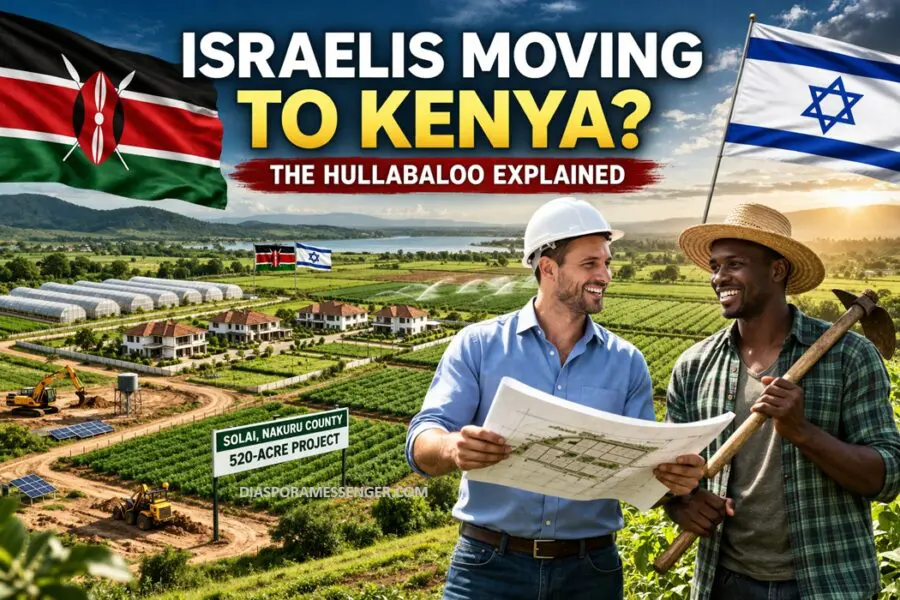
Nairobi, Kenya (2026) — A high-profile Israeli-linked real estate and agricultural project in Solai, Nakuru County, has ignited widespread debate across Kenya, with questions emerging around land ownership, sovereignty, and foreign investment. The controversy—widely described as a “hullabaloo” on social media and in public discourse—centers on a 520-acre development reportedly spearheaded by Israeli investor Erez Rivkin.
Project Overview: Facts Behind the Headlines
The project, located in Solai, Nakuru County, a fertile agricultural zone in Kenya’s Rift Valley, is being positioned as a mixed-use development combining modern farming and residential living.
Key Details:
- Land Size: Approximately 520 acres
- Ownership Model: Leasehold (not freehold)
Development Focus:
- Advanced agriculture (irrigation, greenhouse farming)
- Luxury vacation homes
- Community infrastructure
- Target Market: Both Israeli and Kenyan investors
- Objective: Promote agricultural innovation, knowledge transfer, and local economic growth
Promoters argue that the initiative could help boost food security while introducing cutting-edge Israeli farming technologies into Kenya’s agricultural ecosystem.
Why the Controversy? Understanding the “Hullabaloo”
Despite its economic promises, the project has triggered strong reactions across Kenya. The backlash is rooted in several key concerns:
1. Fear of Land Control and Sovereignty
Many Kenyans worry about large-scale land allocation to foreign nationals, especially in agriculturally productive regions like Nakuru. Critics argue this could gradually erode local control over land resources.
2. “Settler” Comparisons and Global Politics
The project has been linked—rightly or wrongly—to the broader Israeli-Palestinian conflict, with some critics fearing the emergence of a “foreign enclave” or “mini-state.” These comparisons have intensified emotions, especially given ongoing global tensions.
3. Historical Sensitivities: The “Uganda Scheme”
The debate has revived memories of the early 1900s British “Uganda Scheme”, which proposed East Africa as a potential Jewish homeland. Although the plan was rejected, its historical echo has fueled skepticism about foreign settlement narratives.
4. Local Community Concerns
The Solai region is also remembered for the 2018 dam tragedy, and some residents feel that land use priorities should focus on local recovery and community needs rather than foreign-led developments.
5. Rising Land Prices
There are fears that such projects could inflate land prices, making it harder for local farmers and residents to access or retain land.
Legal Framework: What Kenyan Law Says
Under Kenya’s 2010 Constitution and the Land Act:
- Foreigners cannot own freehold land
- They can only acquire land under leasehold tenure (maximum 99 years)
While this ensures land remains legally Kenyan, the long lease periods still raise concerns about de facto control and long-term influence.
Support vs Opposition: A Divided Opinion
Supporters Say:
- The project could bring modern agricultural technology
- Potential for job creation and infrastructure development
- Encourages foreign direct investment (FDI)
- Enhances food security and export potential
Critics Argue:
- Risk of land alienation for local communities
- Sets a precedent for foreign land concentration
- Could deepen economic inequality
- Raises national identity and sovereignty concerns
Data & Economic Context
- Kenya’s agriculture sector contributes over 30% of GDP
- Rift Valley is among the country’s most productive farming regions
- Kenya continues to actively court foreign investment, especially in agriculture and real estate
- Diaspora remittances surpassed KSh 1.1 trillion annually, showing alternative capital sources beyond foreign land deals
Bigger Picture: Investment vs Identity
The Solai project reflects a broader tension in Kenya’s development path—balancing foreign investment with local ownership and national interests. While global partnerships can accelerate economic growth, they often come with complex social, political, and historical implications.
Conclusion
The debate over Israelis moving to Kenya is less about nationality and more about land, power, and perception. As Kenya positions itself as an investment hub in Africa, the Solai project serves as a critical case study on how to navigate foreign partnerships while safeguarding local interests.