

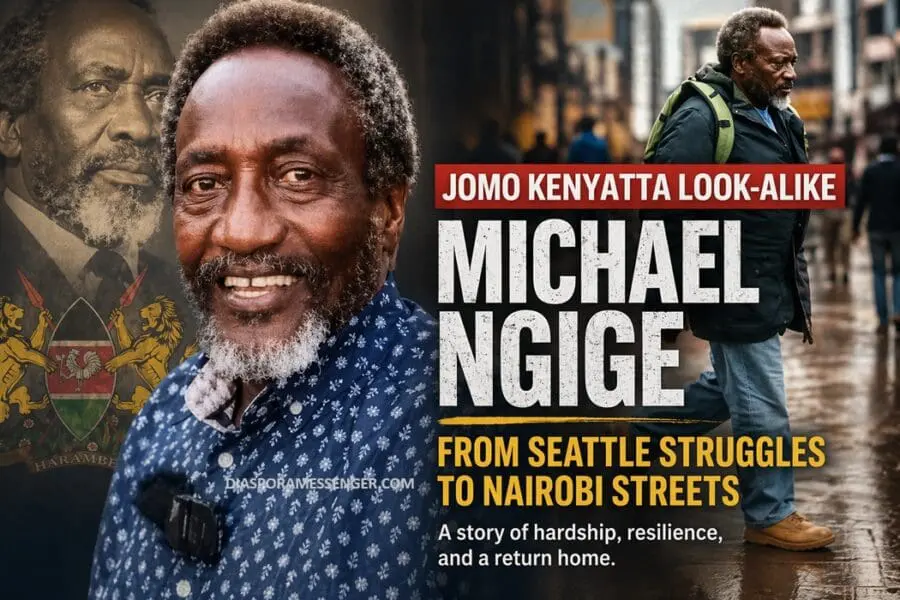
Faced with Mounting Hardship in USA, Kenyan Diaspora Returns Home: The Story of Michael Ngige
In a powerful reflection of the challenges facing many immigrants abroad, a Kenyan man once known for his viral resemblance to Jomo Kenyatta has returned home after years of hardship in the United States.
Michael Ngige’s journey—from hope and opportunity to struggle and eventual return—mirrors a growing reality among members of the Kenyan diaspora navigating life overseas.
From Nairobi to Seattle: A Journey of Hope
Born at Pumwani Maternity Hospital and raised in Nairobi’s Jericho estate, Michael Ngige left Kenya in 2012 in search of stability and opportunity amid political uncertainty at home.
Like many Kenyan immigrants in the U.S., he arrived with dreams of building a better future. Settling in Seattle, Ngige took up work as a food delivery driver, striving to make ends meet while adapting to life in a new country.
However, what began as a hopeful new chapter soon revealed the harsh realities that many diaspora members quietly endure.
Viral Fame for Resemblance to Jomo Kenyatta
While in Seattle, Ngige gained unexpected attention due to his striking resemblance to Kenya’s founding president, Jomo Kenyatta.
Photos of him quickly circulated online, sparking conversations among Kenyans both at home and abroad. His resemblance became a unique identity marker—one that briefly thrust him into the public eye and made him a recognizable figure within diaspora communities.
Yet behind the viral fame was a man battling the everyday struggles of survival in a foreign land.
Life Abroad: Struggles Behind the Scenes
Despite working hard, Ngige faced mounting financial and social challenges. At one point, he relied on support from a local church in Seattle that offered him shelter.
Tragedy struck when a fire destroyed the church premises, leaving him vulnerable and on the brink of homelessness.
His story highlights a rarely discussed reality: while many success stories emerge from the diaspora, a significant number of immigrants face isolation, economic hardship, and limited support systems.
The Difficult Decision to Return Home
Faced with worsening conditions and limited options, Ngige made the life-altering decision to return to Kenya.
Back in Nairobi, where he has two children, he is now attempting to rebuild his life from scratch.
Even during his most difficult moments abroad, Ngige remained vocal about his desire to return and contribute to Kenya’s transformation. He often positioned himself as a voice for ordinary citizens struggling both at home and abroad.
Back in Kenya: From Survival to Activism
Since his return, Ngige has quickly re-emerged in the public space. He was recently spotted among demonstrators in Nairobi CBD, joining protests that reflect growing frustration among citizens over economic and governance issues.
His participation signals a shift—from survival abroad to civic engagement at home.
A Growing Trend: Kenyan Diaspora Returning Home
Ngige’s story is not isolated. Increasingly, some members of the Kenyan diaspora are choosing to return home due to:
- Rising cost of living in countries like the United States
- Immigration and policy uncertainties
- Limited social safety nets
- Mental health and isolation challenges
- Desire to reconnect with family and invest back home
While many Kenyans abroad continue to thrive and contribute significantly through remittances and investments, stories like Ngige’s reveal a more complex picture of diaspora life.
Lessons from the Diaspora Experience
Michael Ngige’s journey underscores important lessons for aspiring migrants and policymakers alike:
- Migration is not always a guaranteed success story
- Support systems are critical for diaspora survival
- Reintegration back home requires structured support
- Opportunities in Kenya are increasingly viable for returnees
Conclusion
As Kenya continues to engage its diaspora community as a key pillar of economic growth, stories like that of Michael Ngige provide a sobering but necessary perspective.
His return home is not just a personal decision—it is part of a broader narrative shaping the future of migration, identity, and opportunity for Kenyans worldwide.