


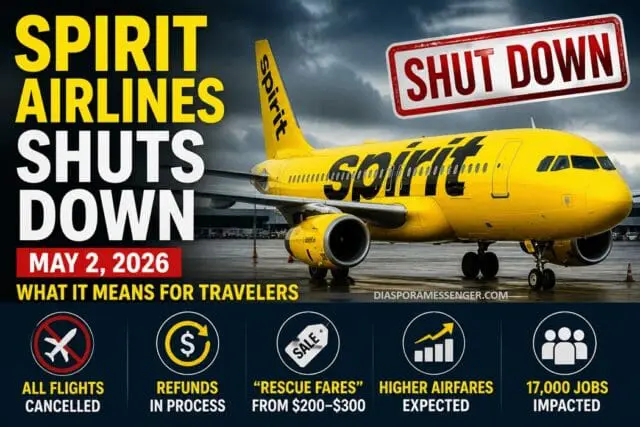
In a shocking development, Spirit Airlines has officially ceased operations as of May 2, 2026, becoming the first major U.S. airline collapse in over 25 years. The sudden shutdown has left thousands of passengers stranded, disrupted travel plans nationwide, and raised serious concerns about rising airfare and reduced competition in the aviation sector.
The airline’s closure follows failed rescue negotiations, rising fuel costs, and ongoing global economic pressures, including instability linked to regional conflicts.
All Flights Cancelled: What Passengers Should Know
Effective immediately, all Spirit Airlines flights have been grounded. The airline has also halted customer service operations.
- Passengers are advised NOT to go to the airport
- No rebooking assistance is available directly from Spirit
- Travelers must independently arrange alternative flights
This has created confusion and urgency, especially for travelers with imminent departures.
Refund Process: What to Expect
Spirit Airlines has stated that:
- Refunds will be automatically processed for tickets booked directly via their website
- Refund timelines may vary due to high volume
- Passengers who booked through third-party platforms like Expedia must contact those agencies directly
Travelers are encouraged to monitor their email and bank statements for updates.
“Rescue Fares” Offered by Major Airlines
In response to the crisis, major U.S. carriers—including Delta Air Lines, United Airlines, American Airlines, Southwest Airlines, and Frontier Airlines—have introduced “rescue fares”.
👉 Key details:
- Discounted one-way fares typically range from $200–$300
- Limited availability on select routes previously served by Spirit
- Travelers may need to provide their original Spirit booking confirmation
Passengers are urged to act quickly as these discounted seats are expected to sell out fast.
Higher Airfares Expected Nationwide
The collapse of Spirit Airlines is expected to have long-term effects on airfare pricing:
- Reduced competition in the low-cost segment
- Likely increase in ticket prices, especially on leisure routes
- Greater pricing power for major carriers
Budget-conscious travelers—particularly those flying to destinations like Las Vegas and Florida—will feel the impact most.
Reduced Capacity and Travel Options
Spirit Airlines was a major player in the ultra-low-cost carrier (ULCC) market. Its exit means:
- Fewer affordable flight options
- Reduced seat availability on popular routes
- Increased demand for remaining airlines
This could particularly affect diaspora travelers and families who rely on budget airlines for frequent travel.
Job Losses: Thousands Affected
The shutdown has resulted in approximately 17,000 job losses, impacting:
- Pilots and flight attendants
- Ground staff and customer service teams
- Corporate and operational employees
This marks one of the largest layoffs in the U.S. aviation industry in recent years.
Industry Impact: A Turning Point for Budget Travel
The collapse of Spirit Airlines signals a major shift in the aviation landscape:
- Questions about the sustainability of ultra-low-cost models
- Increased consolidation in the airline industry
- Potential regulatory scrutiny on pricing and competition
Analysts warn that without strong low-cost competitors, air travel could become significantly more expensive in the long run.
What Travelers Should Do Now
If you were affected by the shutdown:
✔️ Check your email for refund confirmation
✔️ Visit airline websites directly to book rescue fares
✔️ Contact third-party booking platforms if applicable
✔️ Monitor airfare trends and book early to avoid price hikes
Conclusion
The sudden shutdown of Spirit Airlines marks a historic moment in U.S. aviation. While immediate concerns center around stranded passengers and refunds, the long-term effects—higher fares, reduced competition, and fewer budget options—will reshape how Americans travel.
For diaspora communities and frequent flyers, this is a critical moment to stay informed, plan ahead, and adapt to a rapidly changing travel environment.