


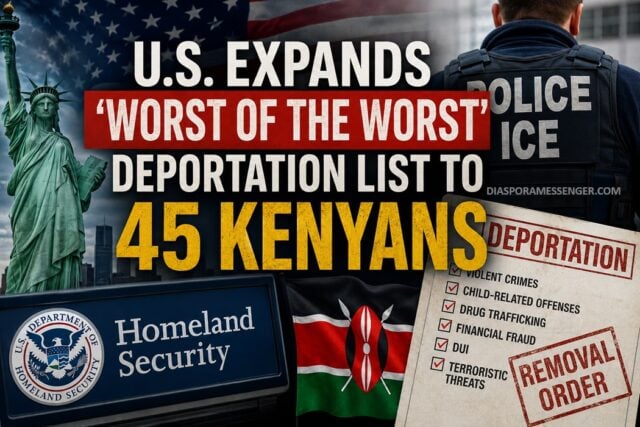
The United States Department of Homeland Security (DHS) has significantly expanded its controversial “Worst of the Worst” deportation database, increasing the number of Kenyan nationals flagged for priority removal from 15 to 45 individuals.
The latest update comes amid a broader immigration enforcement campaign targeting undocumented immigrants who have been arrested, charged, or convicted of serious criminal offenses across the United States.
The move highlights the growing scrutiny facing undocumented migrants with criminal records as federal authorities intensify efforts to remove individuals deemed a threat to public safety.
DHS Triples Number of Kenyans on Priority Deportation List
According to updated DHS records, the number of Kenyan nationals listed in the high-priority deportation database has tripled since the initial publication of the list late last year.
The online portal publicly displays photographs, names, and criminal backgrounds of individuals identified as enforcement priorities by immigration authorities.
Officials say the database is intended to increase transparency while focusing public attention on non-citizens accused or convicted of serious offenses.
The agency maintains that the initiative specifically targets individuals considered risks to community safety rather than undocumented immigrants generally.
Serious Criminal Allegations Cited
The 45 Kenyan nationals included in the database have reportedly been linked to a range of serious state and federal criminal offenses.
According to DHS records, the charges and convictions associated with individuals on the list include:
Violent Crimes
- Homicide and murder-related offenses
- Armed robbery
- Aggravated assault
- Domestic violence and domestic assault
Child-Related Offenses
- Child molestation
- Child cruelty
- Crimes involving minors
Public Safety Threats
- Drug trafficking
- Terroristic threats
- Driving under the influence (DUI)
- Weapons-related offenses
Financial Crimes
- Identity theft
- Check forgery
- Money laundering
- Fraud-related offenses
Immigration officials argue that individuals involved in these crimes are among the highest priorities for detention and removal proceedings.
More Than 1,200 Kenyans Face Removal Orders
Beyond the high-profile deportation database, immigration records indicate that more than 1,200 Kenyan nationals are currently on a broader non-detained docket facing standard removal orders.
These cases involve individuals who have received deportation orders but are not presently being held in immigration detention facilities.
The figure reflects a wider trend of increased immigration enforcement under policies aimed at accelerating removals and reducing the backlog of unresolved immigration cases.
For many Kenyan immigrants living in the United States without legal status, the latest developments serve as a reminder of the importance of maintaining lawful immigration status and complying with U.S. laws.
DHS Introduces Self-Deportation Incentive Program
As part of efforts to streamline deportation procedures, the administration launched a voluntary self-deportation initiative through a dedicated mobile application.
The program encourages undocumented immigrants to leave the United States voluntarily before being arrested by immigration authorities.
Under the initiative, eligible participants may receive:
- Government-funded travel assistance
- Logistical support for departure
- Financial incentives of up to $3,000 (approximately KSh 387,000)
Officials say voluntary departures reduce enforcement costs while allowing individuals to avoid detention and formal removal proceedings.
Supporters of the program argue that it provides a humane alternative to arrest and detention, while critics have raised concerns about the broader impact on immigrant communities.
What This Means for the Kenyan Diaspora
The expansion of the deportation database is likely to attract significant attention within the Kenyan diaspora community in the United States.
Community leaders continue to urge immigrants to:
- Maintain valid immigration status
- Seek legal immigration advice when necessary
- Comply with federal and state laws
- Address unresolved immigration issues before they escalate into removal proceedings
Legal experts also advise immigrants facing immigration challenges to consult qualified immigration attorneys to understand their rights and available legal options.
As U.S. immigration enforcement policies continue to evolve, thousands of immigrants—including Kenyans—will be closely monitoring how these measures affect deportation priorities and future pathways to legal status.
Conclusion
The DHS decision to expand its “Worst of the Worst” deportation list from 15 to 45 Kenyan nationals marks a significant escalation in immigration enforcement targeting non-citizens accused or convicted of serious crimes. With more than 1,200 Kenyans also facing removal orders and new self-deportation incentives being introduced, the immigration landscape in the United States is becoming increasingly challenging for undocumented migrants. For members of the Kenyan diaspora, the latest developments underscore the importance of maintaining legal status and seeking professional guidance when navigating complex immigration matters.