


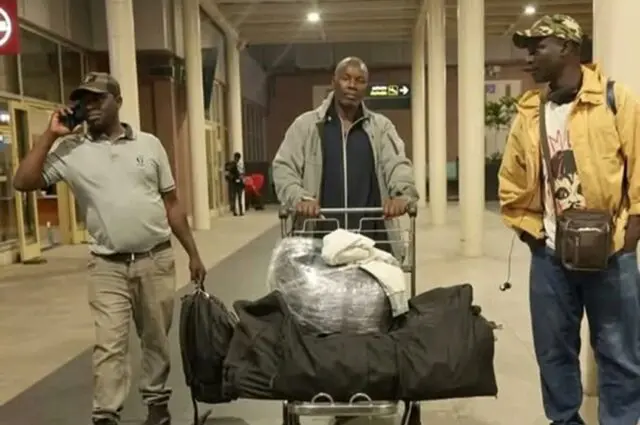
Kenyan Businessman Returns to Kenya After Losing Everything in South Africa
A Kenyan entrepreneur has returned home after spending 12 years in South Africa, saying anti-immigrant violence destroyed everything he had worked to build.
David Ondimu, a 42-year-old father from Kisii County, arrived back in Kenya carrying only a backpack after fleeing what he describes as escalating threats against foreign nationals. His return marks the end of a journey that began with hope and ambition but ended in financial ruin, family separation, and uncertainty.
David’s story reflects the growing concerns surrounding the safety and security of African migrants living in South Africa, where periodic outbreaks of xenophobic violence have disrupted thousands of lives over the past two decades.
A Dream Built Through Hard Work
David left Kenya more than a decade ago seeking better economic opportunities in South Africa.
Like many members of the Kenyan diaspora, he started with humble beginnings before gradually establishing a successful electronics business. His hard work enabled him to support himself and create a stable future.
While living in South Africa, David married Lerato, a South African citizen, and together they built a family with two young children.
For 12 years, South Africa became his home.
Business Destroyed During Anti-Immigrant Violence
According to David, everything changed during the anti-immigrant violence reported in June 2026.
He says a mob attacked his electronics shop, looted merchandise, and later set the premises on fire. Besides losing his business, David says he received threats warning him to leave the country before June 30 or risk being killed.
With his safety no longer guaranteed, he made the painful decision to flee.
Unable to make arrangements for his family to travel immediately, David returned to Kenya alone while his wife and children remained behind in South Africa because they are South African citizens.
Instead of returning as a successful businessman after years abroad, David came home with no savings, no business, and no certainty about what comes next.
Family Separation Adds Emotional Pain
Perhaps the greatest loss David faces is not financial.
His wife and two children remain thousands of miles away, leaving the family separated by borders, immigration regulations, and financial hardship.
For many migrant families, forced separation creates emotional stress that can last for months or even years. Children often experience anxiety, while parents struggle with the financial and emotional burden of rebuilding their lives from scratch.
David says he hopes one day to reunite with his family under safer circumstances.
Kenyan Diaspora Impact
David’s experience highlights the risks faced by many Kenyans working abroad.
Thousands of Kenyans have relocated to South Africa over the years to pursue employment, establish businesses, study, or invest. Many have become successful entrepreneurs contributing to both the South African and Kenyan economies.
However, recurring anti-immigrant violence has left many foreign nationals—including Kenyans—living with uncertainty.
For the Kenyan diaspora, such incidents can have lasting consequences:
- Loss of businesses and investments accumulated over many years.
- Reduced remittances sent to families in Kenya.
- Increased emotional and psychological trauma.
- Family separation due to immigration and citizenship complications.
- Greater reluctance among potential migrants considering South Africa as a destination.
Remittances remain one of Kenya’s largest sources of foreign exchange, with the country receiving more than US$5 billion annually from citizens living abroad, according to the Central Bank of Kenya. While the United States remains the largest source of remittances, Kenyans across Africa also make important contributions to relatives back home.
Immigration Implications
David’s story also illustrates the complex immigration realities many migrants face.
Although he lived in South Africa for over a decade, immigration status, residency requirements, and family citizenship laws can complicate relocation during emergencies.
Mixed-nationality families often encounter significant legal and logistical challenges when forced to move because:
- Spouses may hold different citizenships.
- Children may qualify only under one country’s nationality laws.
- Emergency relocation may require visas and travel documentation that cannot be obtained quickly.
- Financial losses make international relocation even more difficult.
Immigration experts advise migrants to maintain updated legal documentation, secure copies of essential records, and establish emergency contingency plans for their families.
Expert Opinion
Migration policy specialists note that xenophobic violence affects not only individuals but also regional economic integration.
According to migration researchers, African economies increasingly depend on cross-border entrepreneurship, skilled labor mobility, and regional trade. Violence targeting foreign nationals undermines investor confidence, disrupts businesses, discourages entrepreneurship, and weakens social cohesion.
Experts also emphasize that governments should strengthen diplomatic cooperation, improve protection mechanisms for migrants, and ensure that victims of violence have access to legal assistance, temporary shelter, and pathways to rebuild their lives.
The Broader Picture
South Africa has experienced several waves of anti-immigrant violence over the past two decades. Foreign-owned businesses have frequently been targeted during outbreaks, affecting migrants from across the African continent.
While many South Africans reject xenophobic violence and support peaceful coexistence, repeated incidents continue to create fear among immigrant communities.
Human rights organizations have consistently called for stronger law enforcement responses, community dialogue, and long-term solutions addressing unemployment, crime, and misinformation that often fuel hostility toward migrants.
Looking Ahead
David Ondimu now faces the difficult challenge of rebuilding his life in Kenya after losing the business he spent 12 years establishing.
His immediate concern remains the safety and future reunion with his wife and children.
His story serves as a sobering reminder that behind every headline about migration are families whose lives can change overnight through circumstances beyond their control.
As Kenya continues encouraging its citizens to seek opportunities abroad, the protection and welfare of the Kenyan diaspora remain critical priorities for governments, diplomatic missions, and diaspora organizations worldwide.