


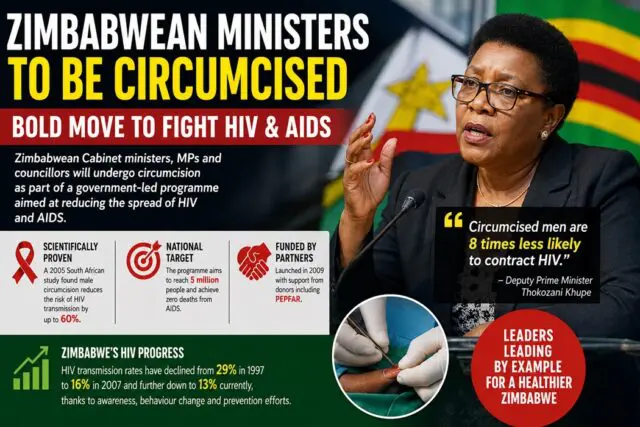
Zimbabwe has intensified its fight against HIV and AIDS with a unique public health initiative that will see Cabinet ministers, Members of Parliament (MPs), and local councillors undergo voluntary medical circumcision as part of a nationwide HIV prevention campaign.
The program, which aims to encourage wider public participation in HIV prevention efforts, is designed to demonstrate leadership by example and increase awareness about scientifically proven methods of reducing HIV transmission.
Leaders Asked to Lead from the Front
Zimbabwe’s leadership believes that public officials can play a critical role in influencing health behaviors among citizens. Speaking about the initiative, Deputy Prime Minister Thokozani Khupe emphasized the importance of leaders participating in the campaign to inspire confidence and increase uptake of voluntary medical male circumcision across the country.
According to Khupe, the government’s goal is to significantly reduce HIV infections and ultimately achieve zero deaths related to AIDS through a combination of prevention, awareness, testing, and treatment programs.
“Leaders should lead by example if we are to successfully combat the HIV and AIDS epidemic,” she said.
Scientific Evidence Behind Male Circumcision
The campaign follows scientific studies that have linked male circumcision to a reduced risk of HIV transmission during heterosexual intercourse.
A landmark study conducted in South Africa in 2005 found that male circumcision could substantially lower the risk of HIV infection among men. The findings prompted several African countries, including Zimbabwe, to incorporate voluntary medical circumcision into their national HIV prevention strategies.
Health experts note that while circumcision can reduce the risk of HIV transmission, it does not provide complete protection. Safe sexual practices, regular HIV testing, and access to treatment remain essential components of HIV prevention.
Zimbabwe’s Progress in Reducing HIV Rates
Zimbabwe has been recognized as one of Africa’s success stories in the fight against HIV and AIDS. Over the years, the country has recorded significant declines in HIV prevalence.
Statistics indicate that HIV infection rates dropped from approximately 29 percent in the late 1990s to 16 percent by 2007 and have continued to decline in subsequent years.
Researchers attribute much of this progress to increased public awareness, behavioral changes, expanded access to HIV testing and treatment services, and aggressive national education campaigns.
International Support for HIV Prevention Programs
Zimbabwe’s voluntary medical circumcision program began in 2009 with support from international development partners, including the U.S. President’s Emergency Plan for AIDS Relief (PEPFAR).
The initiative forms part of broader efforts to strengthen HIV prevention measures and improve public health outcomes across the country.
Government officials hope the involvement of high-profile political leaders will encourage more men to participate in the program and help accelerate progress toward ending the HIV epidemic.
What This Means for African Communities Worldwide
For Africans living abroad, including members of the Zimbabwean and Kenyan diaspora communities, the initiative highlights the continued importance of public health education and HIV prevention efforts across the continent.
As African nations continue to battle HIV/AIDS, innovative awareness campaigns and leadership-driven health initiatives remain key tools in protecting future generations and reducing the burden of the disease.
The Zimbabwe government believes that visible participation by national leaders can help break stigma, promote preventive healthcare, and encourage more citizens to take proactive steps toward protecting their health.