


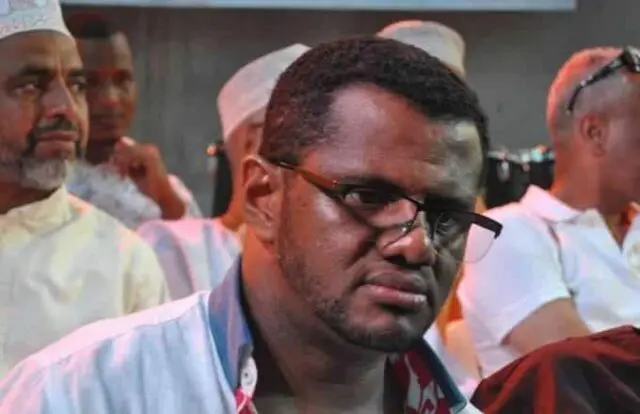
A day after Deputy William Ruto claimed that witnesses had been coached to incriminate him at the International Criminal Court (ICC), the manner in which some of the witnesses were picked have begun to emerge. Sen Omar Hassan, in particular, sheds light on these processes.
Mombasa Senator Omar Hassan, who worked with the Kenya Human Rights Commission in 2010 and 2011, said the investigations were poorly conducted.
“It is true we had seven witnesses under our programme. However, we were working with the Witness Protection Unit (WPU) but only four went to the ICC. This was because information the rest had was either irrelevant or unreliable,” said Omar.
He strongly believes that the Office of The Prosecutor (OTP) did not properly investigate the case. They received witnesses that KNHRC commission and other agencies helped to identify. Indeed, as Sen Omar Hassan reveals, these investigations left much to be desired.
“There was bungling of investigation and massive interference of witnesses. The Prosecution could, for example, have known that it was not possible to slaughter 700 dogs for oathing without this being known,” said Omar
He believes there was no case to answer for Ruto and radio presenter Sang. The evidence was either faulty or inadequate. Moreover, there were too many loose ends.
Ruto referred to these individuals when he addressed the press for the first time on Friday. This was three days after his case was terminated.
“Individuals, civil society and other groups gave false information. It is my prayer that one day God will help them to repent and account for their acts. I forgive them.”
Ruto and his co-accused Henry Kosgei and Joshua arap Sang in December 2010 had been charged with murder, deportation of population, torture and persecution.
Most witnesses who made claims against the DP were from his backyard. These areas include Turbo, Ndalat, Kipkaren Selian, Ziwa, and Moi’s Bridge in Uasin Gishu County.
Ruto was accused of distributing 3,000 guns to militia at his Sugoi home. Additionally, he was accused of holding planning meetings with some retired army generals and police commandants.
The DP, who was at the time Minister for Higher Education, proclaimed his innocence. He blamed Omar for coaching and paying witnesses to link him to the post-election violence. This violence left more than 1,000 people dead. This narrative aligns with what Sen Omar Hassan reveals about the situation.
“You know that all these claims are fabricated. But this is very serious because I’m being accused of killing over 1,000 people my friend,” Ruto said at the time.
He was aggrieved that “Omar had travelled to Eldoret to meet people. They claimed to have witnessed among other things, killing of dogs and using the meat for oathing to take part in the violence.”
Ruto claimed Omar procured and coached six witnesses. The KNHRC bribed and promised to relocate them to foreign countries with their families.
The prosecution also complicated matters over claims. There existed a common plan and one group planned to murder another. All KNHRC told the Waki Commission was that crimes were committed through retaliatory attacks.
“It was up to Ocampo and the OTP to prove if the attacks were spontaneous or not. To say there existed a plan was abnormal,” said Omar. He could not comment authoritatively on claims. Some grassroots NGOs based in Eldoret and other areas in the region used the witness identification programme to solicit for large sums of donor funds and in the process compromised the process.
He said: “What I know is that most of those witnesses were PNU operatives. In human rights work, we only document the region they come from and what they saw. We collect as much information as possible. It is the investigating bodies that are expected to sieve it.”
In November 2010, witnesses claimed they were bribed to link Ruto to the post-election violence.
The two, Ken Braziz Wekesa and William Kepkemboi Rono, swore affidavits. They claimed they had received “upkeep money,” paid up rental houses, and promise of relocation outside Kenya.
They claimed that it was after getting those promises that they agreed to record statements with KNHRC and the Waki Commission.
They told journalists that Omar also asked them to coordinate and assemble witnesses. These witnesses testified before the commissions.
But the senator dismissed those claims. He pointed out that the protection programme for both had been discontinued. This was because ICC did not require them after discovering that their credibility was questionable.
“The Deputy President knows the truth. Those two had survived on witness protection money for over a year. They had developed a dependency syndrome, which made them become hostile upon learning they were to be ejected,” said Omar.
On lessons learned from the ICC case, he is confident that the court raised the level of debate in the country. Consequently, there will be no election-related impunity and warlords.
He, however, fears that a new trend is emerging. Some people who want to aspire for gubernatorial position are turning county inspectorate officers into militia. This is for the purpose of unleashing terror during the 2017 campaigns.
He is equally concerned that one or two individuals have developed a reputation of hiring goons. These goons disrupt rallies, as it happened at Senator Moses Wetangula’s meeting in Kakamega last week.
Source –standardmedia.co.ke
Follow our WhatsApp Channel and X Account for news updates.