


Kenyan Man Charged with Illegal Firearm Possession in the U.S. After Immigration Status Allegations
A 40-year-old Kenyan national has pleaded not guilty to federal charges accusing him of illegally possessing a firearm in the United States, a case that highlights the serious legal consequences undocumented immigrants can face under U.S. federal law.
Kevin O. Naholi appeared before the U.S. District Court on Thursday after being indicted on one count of possession of a firearm by a prohibited person. Federal prosecutors allege Naholi was prohibited from possessing a firearm because he was living in the United States without lawful immigration status and had a previous domestic violence conviction.
The court granted the government’s request to keep Naholi in custody pending trial. Jury selection and trial are scheduled to begin in November.
Allegations of Threatening Neighbors with a Rifle
According to the federal criminal complaint, police responded to reports on August 26 and 27 after witnesses claimed Naholi was standing outside his residence in Cedar Rapids, Iowa, holding a .22-caliber rifle while allegedly threatening people passing through the neighborhood.
When officers arrived at the scene, authorities say Naholi retreated into his home and refused repeated requests to surrender peacefully.
Court documents indicate that his wife and son exited the residence and spoke with responding officers. His son reportedly informed police that his father possessed firearms inside the home. Despite efforts by family members to persuade him to come outside, Naholi allegedly remained inside the residence.
Police negotiators spent more than 11 hours attempting to resolve the situation before a Cedar Rapids Police Special Response Unit entered the home and took him into custody without further incident.
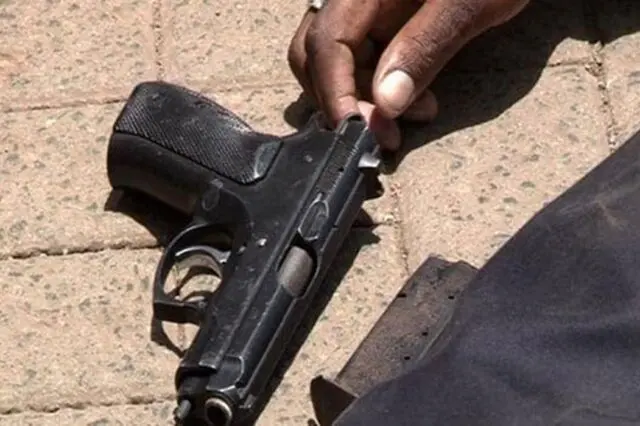
Authorities later searched the residence with the homeowner’s consent and recovered a .22-caliber Winchester rifle, according to court records.
Immigration History Detailed in Court Documents
Federal court documents state that Naholi legally entered the United States in 2003 using a student visa.
However, immigration authorities allege that his visa was terminated in 2004 after he failed to enroll in the educational program required under the terms of his visa.
Records indicate he was later placed into removal proceedings by U.S. Immigration and Customs Enforcement (ICE). Those proceedings were reportedly terminated in 2016 after Naholi pursued legal avenues toward obtaining permanent legal status and eventual U.S. citizenship.
Court filings further indicate that his application was ultimately denied in June, leaving his immigration status unresolved.
Prior Domestic Violence Conviction
Federal prosecutors also cite a 2008 misdemeanor domestic assault conviction in Linn County, Iowa, as part of the basis for the firearm charge.
Under U.S. federal law, certain individuals—including those without lawful immigration status and people convicted of qualifying domestic violence offenses—are generally prohibited from possessing firearms.
If convicted on the federal charge, Naholi could face up to 10 years in federal prison.
Immigration Implications for Kenyan Diaspora Communities
Although this case involves one individual, immigration attorneys note that it serves as an important reminder for members of the Kenyan diaspora to remain compliant with both immigration and criminal laws.
The United States is home to a growing Kenyan-born population. According to the U.S. Census Bureau’s American Community Survey, there are an estimated 170,000 to 180,000 Kenyan-born immigrants living in the United States. The overwhelming majority are law-abiding residents who contribute significantly to healthcare, technology, education, business, transportation, and the U.S. military.
Legal experts emphasize that even relatively old criminal convictions can carry long-term immigration consequences, particularly when combined with unresolved immigration status. In some cases, convictions may affect eligibility for permanent residency, naturalization, or other forms of immigration relief.
Expert Opinion
Immigration law specialists say this case illustrates the intersection between federal firearms regulations and U.S. immigration law.
“Non-citizens should understand that immigration status and criminal history are closely scrutinized under federal law,” says immigration attorney David Leopold, former president of the American Immigration Lawyers Association (AILA). “Individuals facing criminal charges should seek both criminal defense and immigration counsel because the immigration consequences can be just as significant as the criminal penalties.”
Experts also encourage immigrants to maintain valid legal status, promptly address visa or residency issues, and seek qualified legal advice before making decisions that could affect their future in the United States.
Presumption of Innocence
Naholi has pleaded not guilty, and under the U.S. legal system, every defendant is presumed innocent unless proven guilty beyond a reasonable doubt in court. The allegations against him remain subject to judicial determination.
Conclusion
The federal case against Kevin O. Naholi underscores the complex relationship between U.S. immigration law, firearm regulations, and criminal justice. While the outcome will ultimately be decided in court, the case serves as a reminder that maintaining lawful immigration status and complying with federal and state laws is essential for immigrants seeking to build stable lives in the United States.
For the Kenyan diaspora, it also reinforces the importance of understanding how criminal matters may carry lasting immigration consequences that extend far beyond the courtroom.