


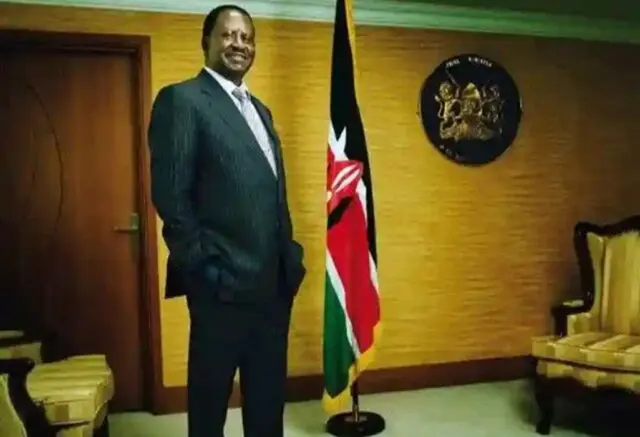
Raila Amolo Odinga, who passed away on October 15, 2025, was more than a politician—he was a towering symbol of Kenya’s long and often turbulent journey toward democracy. Revered and reviled in equal measure, Odinga left an indelible mark on the nation’s political fabric.
Though he never fulfilled his long-held ambition of becoming president, his impact on the country’s governance, democratic space, and political culture was profound and enduring. Raila Odinga the doyen who shaped Kenya’s political landscape, indeed.
The Significance of the Nickname “Doyen”
To many, Odinga was simply “Baba”—a father figure of Kenyan politics. But to his peers and critics alike, the moniker “Doyen” came to encapsulate his status as the senior-most statesman in the political arena.
A doyen is not just an elder but a master of their field, and Odinga’s mastery lay in his deep political instincts, his knack for reinvention, and his unmatched ability to mobilize support across ethnic and ideological divides. He was a strategic, often unpredictable player—sometimes the kingmaker, sometimes the disruptor, always the force to reckon with. Raila Odinga the doyen who shaped political strategies with cunning and charisma.
Activism and the Fight for Democracy
Raila Odinga’s political journey began in the crucible of Kenya’s struggle for multiparty democracy. In the 1980s, under President Daniel arap Moi’s one-party regime, Odinga emerged as a fierce government critic.
Raila Odinga the doyen who shaped political activism, left a lasting impact through his relentless advocacy. His activism came at great personal cost: he was detained without trial multiple times, spending a total of eight years in detention. Yet, these experiences only steeled his resolve.
In the early 1990s, as internal and international pressure mounted on the Moi regime, Odinga was among the key figures who agitated for the reintroduction of multiparty politics. He played a central role in shaping the opposition and inspiring hope among millions who longed for political pluralism. Raila Odinga the doyen who shaped the opposition, made the struggle for democratic reforms synonymous with his name.
Presidential Campaigns and Coalition Government
Odinga’s pursuit of the presidency spanned decades and five elections—1997, 2007, 2013, 2017, and 2022. Each campaign reflected both the evolving dynamics of Kenyan politics and Odinga’s remarkable staying power.
In 1997, he ran as the National Development Party (NDP) candidate, finishing third. He would later merge NDP with the ruling KANU party in a controversial move, only to walk out again in opposition to Uhuru Kenyatta’s handpicked candidacy in 2002.
In 2007, Odinga came closest to the presidency. Running on an ODM ticket, he sparked a populist wave that threatened the incumbent, Mwai Kibaki. The disputed outcome led to post-election violence that claimed over 1,000 lives. A power-sharing deal brokered by international mediators made Odinga Kenya’s second Prime Minister, in a coalition government with Kibaki—a role he used to push reforms and oversee the drafting of the 2010 Constitution.
His 2013 and 2017 losses to Uhuru Kenyatta were again marred by claims of electoral fraud. In 2017, after the Supreme Court annulled the presidential election—the first such ruling in Africa—Odinga boycotted the rerun, deepening a political crisis.
But in a dramatic turnaround, 2018 saw “The Handshake”—a historic political truce between Odinga and President Kenyatta. The move shocked allies and adversaries alike and led to the Building Bridges Initiative (BBI), a failed attempt at constitutional reform, but a successful bid at national healing.
In 2022, Odinga ran his final presidential race with Kenyatta’s backing, only to lose to William Ruto, then Deputy President. The result was upheld by the courts, closing a chapter on Odinga’s presidential ambitions but not his political influence.
Later Career and Passing
In his later years, Odinga sought to leverage his statesmanship on the continental stage. In 2023, he launched a bid for Chairperson of the African Union Commission—a role that would have crowned his career with continental clout. Though unsuccessful, the campaign underscored his stature beyond Kenya’s borders.
Despite decades of rivalry, Odinga in 2024 entered into a surprise political détente with President William Ruto, signaling a rare moment of political maturity and national interest. The move paved the way for Odinga to take on a mentorship role in national dialogue and governance reforms.
On October 15, 2025, the nation was stunned by news of his passing. Tributes poured in from across the political spectrum, the continent, and the diaspora. Former foes hailed his tenacity; supporters mourned a hero; historians marked the passing of an era. Raila Odinga the doyen who shaped political history, left a legacy that historians will discuss for generations.
Legacy
Raila Odinga’s legacy is complex, as is the country he helped shape. He was a political enigma—fiery yet conciliatory, radical yet pragmatic. He spent a lifetime walking the tightrope between protest and power, idealism and compromise.
While the presidency eluded him, Odinga was, without question, one of the most consequential political figures in Kenya’s post-independence history. The Doyen of Kenyan politics exits the stage, but his imprint remains—in the Constitution, in the democratic space he helped open, and in the political language of a nation forever changed by his presence. Raila Odinga the doyen who shaped countless political narratives, left an indelible mark.
“History will judge me kindly,” he once said. For a man who never became president but shaped nearly every presidency of his time, it already has.
Follow our WhatsApp Channel and X Account for news updates.