


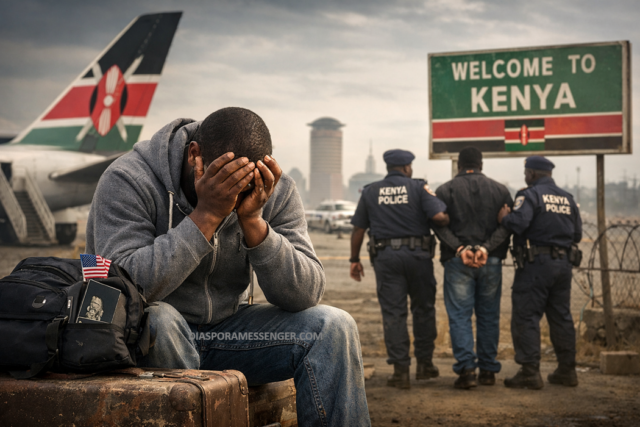
Kenyans living abroad—especially in the United States—are increasingly facing a difficult reality: the looming threat of deportation. Yet, for many, returning home is not seen as a relief, but as a deeply feared outcome. Beyond immigration status, the decision is shaped by social pressure, financial expectations, and psychological trauma.
A growing body of diaspora-focused reports and community observations reveals that deportation is not just a legal process—it is a life-altering experience tied to identity, dignity, and survival.
The Hidden Crisis Among Kenyan Deportees
For many members of the Kenyan diaspora, life abroad is tied to a powerful narrative: success, sacrifice, and upward mobility. Returning home without tangible achievements—such as property, investments, or financial stability—can feel like a public failure.
This has led some individuals to remain in the U.S. without legal status for years, living in fear, rather than face the perceived shame of returning home empty-handed.
Key Reasons Kenyans Fear Returning Home
1. Intense Social Stigma and Shame
In many Kenyan communities, going abroad is equated with success. Deportation disrupts that narrative.
Returnees are often subjected to judgment, gossip, and unrealistic comparisons. Many report feeling isolated or embarrassed, particularly when they cannot meet the expectations of relatives who believe life abroad guarantees wealth.
2. Failed Financial Expectations
Diaspora remittances remain one of Kenya’s largest sources of foreign income, surpassing KSh 1 trillion annually in recent years.
Families often depend heavily on these funds, placing immense pressure on individuals abroad. Returning without savings or investments can strain family relationships and damage one’s perceived value within the community.
3. Loss of Identity and Status
Long-term diaspora residents frequently experience identity dislocation. After years abroad, many lose their social networks and economic foothold in Kenya.
Experts note that returnees often face reverse culture shock, struggling to reintegrate into a society that has evolved in their absence.
4. Reintegration Challenges
Kenya lacks comprehensive reintegration programs tailored to deportees. Many returnees face:
- High unemployment rates
- Limited access to capital
- Lack of psychosocial support
Some arrive with little to no savings, making it difficult to rebuild their lives.
5. Fear of U.S. Immigration Penalties
Under U.S. immigration law, overstaying a visa can trigger serious consequences:
- 3-year ban for overstays of more than 180 days
- 10-year ban for overstays exceeding one year
These penalties discourage voluntary return, as many fear losing the opportunity to legally re-enter the United States in the future.
6. Rise of “Self-Deportation”
To avoid the humiliation of forced deportation—often involving detention and handcuffs—some Kenyans opt for voluntary departure, commonly referred to as “self-deportation.”
However, this decision comes with emotional distress, as individuals must abandon jobs, families, and long-term plans built abroad.
7. Psychological Trauma and Mental Health Impact
Deportation is not just a physical relocation—it is often described as a “violent interruption of dreams.”
Many returnees experience:
- Depression and anxiety
- Loss of self-worth
- Social withdrawal
Children of deported individuals are also affected, sometimes facing emotional and behavioral challenges due to abrupt life changes.
Data Snapshot: The Diaspora Reality
- Remittances to Kenya: Over $5 billion annually
- Top diaspora destinations: United States, UK, Canada, Middle East
- Estimated undocumented migrants: Thousands of Kenyans remain in irregular status globally
- Reintegration support: Limited structured national programs
A Call for Policy and Community Support
Experts and diaspora advocates are calling for:
- Structured reintegration programs for returnees
- Mental health support services
- Financial literacy and investment training
- Public awareness campaigns to reduce stigma
Addressing these challenges could help transform deportation from a crisis into an opportunity for rebuilding lives.
Changing the Narrative
The fear surrounding deportation highlights a deeper societal issue: the pressure to equate migration with success.
For many Kenyans abroad, the journey is complex and unpredictable. Shifting the narrative—from judgment to support—may be key to helping returnees reintegrate with dignity.