

The journey to the United States is often filled with hope, ambition, and months—sometimes years—of preparation. For many Kenyans in the diaspora pipeline, securing a visa represents more than just travel; it symbolizes opportunity, education, and a better future. But for one Kenyan man, that dream came to a sudden and unexpected halt.
A Dream That Felt Within Reach
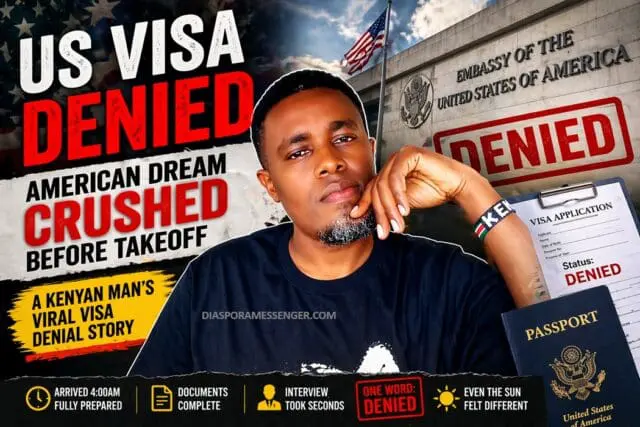
Leo Subaru, a Kenyan aspiring nurse, has gone viral after sharing his unforgettable—and surprisingly relatable—U.S. visa denial experience. His story has captured attention across social media, blending humor with the harsh reality many visa applicants face.
Leo had done what many prospective international students strive for: he secured a nursing scholarship and had already begun attending online classes with peers from around the world. Mentally, he had crossed continents.
“I’m telling you, that day I was not just hopeful… I was mentally already in America,” Leo shared.
In his own words, he had even started adopting what he jokingly called a “trial version” of an American accent—confidently pronouncing words like “water” with a new flair. Despite physically being in Kiambu, wrapped in a leso to fight the cold, his mind was fully immersed in his American dream.
The Embassy Interview Shock
Like thousands of Kenyans applying for U.S. visas each year, Leo prepared thoroughly for his embassy interview. He arrived as early as 4:00 AM, documents in hand, ready to present his case.
But what followed stunned him.
According to Leo, the interview lasted only moments before the consular officer issued a one-word verdict:
“Denied.”
Just like that, months of preparation, emotional investment, and anticipation came crashing down.
“I walked out in shock,” he recalled. “Even the morning sun felt different after that.”
The Emotional Toll of Visa Denials
Leo’s experience highlights a reality many Kenyan diaspora hopefuls understand all too well—the unpredictability of visa approvals. Despite meeting academic requirements or securing scholarships, applicants can still face rejection due to various factors, including:
- Failure to demonstrate strong ties to home country
- Concerns about intent to return after studies
- Incomplete or inconsistent documentation
- Interview performance and communication
For many, the visa interview becomes the most critical—and nerve-wracking—step in the journey.
Turning Pain Into Humor
What makes Leo’s story stand out is not just the disappointment, but how he chose to respond. Instead of dwelling on the setback, he shared his experience with humor and honesty, resonating with thousands online.
His vivid storytelling—switching between confidence, excitement, and sudden shock—has made his post both entertaining and deeply relatable.
“So there I was — scholarship secured, nursing dream alive… greeting classmates like, ‘Hey guys!’ meanwhile I’m in Kiambu wrapped in a leso because of cold,” he joked.
A Common Story Across the Kenyan Diaspora
Leo’s story reflects a broader narrative among Kenyan diaspora aspirants. Every year, thousands apply for study, work, or travel visas to countries like the United States, United Kingdom, Canada, and Australia. While many succeed, others face rejection despite strong qualifications.
The experience can be emotionally draining—especially when applicants have already invested financially and mentally in the process.
Yet, stories like Leo’s also serve as reminders that setbacks do not define the future. Many who face initial visa denials go on to reapply successfully or explore alternative pathways abroad.
Lessons for Future Applicants
For those planning to apply for a U.S. visa, Leo’s experience offers a few important takeaways:
- Stay prepared, but remain realistic
- Avoid overconfidence before approval
- Clearly demonstrate ties to your home country
- Be honest and consistent during the interview
- Have a backup plan in case of rejection
Hope Beyond Rejection
While the phrase “American Dream” remains powerful, Leo’s story shows that the journey toward it is not always straightforward. For many Kenyans, the path includes unexpected detours—but also resilience, growth, and new opportunities.
In the end, what started as a painful moment has turned into a shared experience—one that continues to spark both laughter and reflection across the diaspora community.