

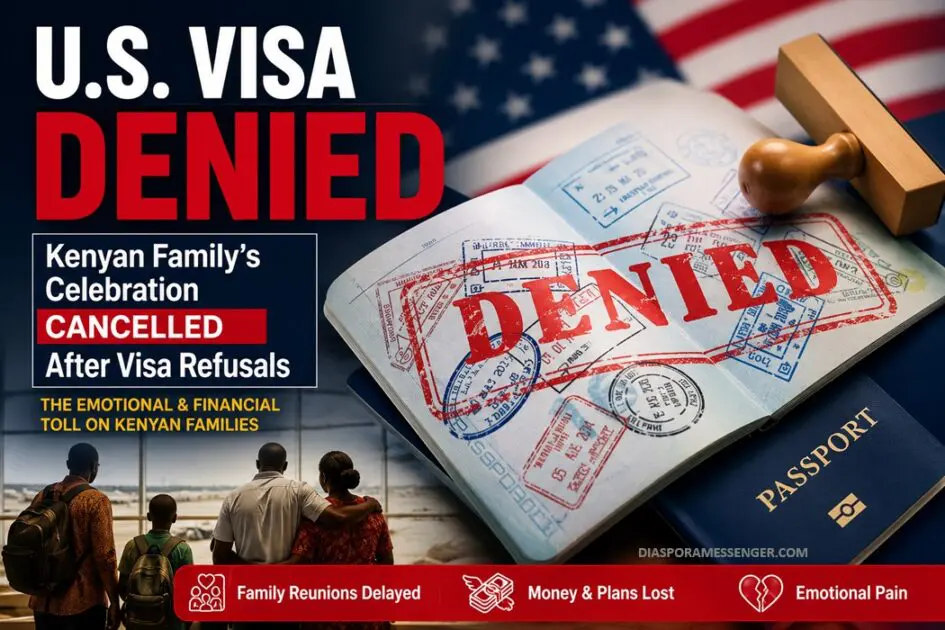
USA Visa Denials Force Kenyan Family to Cancel Long-Planned Celebration
What was meant to be a joyful family reunion in the United States has turned into a heartbreaking disappointment after several Kenyan relatives and friends were denied U.S. visitor visas.
A Kenyan woman living in the United States has shared her frustration after every family member and friend she invited from Kenya was refused a B-2 visitor visa at the U.S. Embassy in Nairobi. The denials forced the family to cancel a major celebration that had been planned for months.
The incident highlights the emotional and financial toll that visa refusals can have on families separated by international borders, particularly within the Kenyan diaspora community.
Family Members Prepared for the Trip
According to the woman, invitations had been sent well in advance to relatives and close friends, many of whom are employed professionals, entrepreneurs, and respected members of their communities in Kenya.
Several applicants had already received approval for two weeks of leave from their employers, purchased travel necessities, and made arrangements to attend the special event in the United States.
However, after attending their visa interviews at the U.S. Embassy in Nairobi, every applicant was denied a visa.
The unexpected outcome forced the family to cancel the celebration and begin exploring alternative ways to mark the occasion.
Visa Fees Paid but No Travel
The woman expressed disappointment that every applicant paid the non-refundable U.S. visa application fee and prepared all required documentation in good faith.
She said the family also sought clarification regarding the refusals but felt the explanation they received did not adequately address their concerns.
According to her account, they were informed that an executive order was affecting visa issuance, although no detailed explanation was provided regarding the individual decisions.
The experience has left many family members emotionally devastated after months of planning.
Understanding U.S. Visitor Visa Decisions
Under U.S. immigration law, visitor visas are discretionary.
Consular officers evaluate each application individually to determine whether an applicant qualifies for a temporary visitor visa. Applicants must demonstrate strong ties to their home country, sufficient financial resources, and convincing evidence that they intend to return home after their visit.
Even applicants with stable employment, businesses, property ownership, or family responsibilities may still be denied if the interviewing officer is not satisfied that they meet the legal requirements.
Importantly, an invitation from relatives living in the United States does not guarantee visa approval.
Immigration Implications for Kenyan Families
For thousands of Kenyan families living abroad, visitor visas are often the only practical way to reunite with parents, siblings, grandparents, and lifelong friends.
When visas are denied, important family milestones—including weddings, graduations, birthdays, baby showers, anniversaries, funerals, and religious celebrations—may proceed without loved ones.
Such denials can also create emotional strain, particularly for diaspora families who have invested significant time and resources planning international gatherings.
The situation serves as a reminder that travel to the United States remains subject to strict immigration screening, regardless of the purpose of the visit.
Expert Opinion
Immigration experts note that visitor visa decisions are based primarily on whether applicants can overcome the legal presumption that every visitor intends to immigrate permanently.
Applicants are generally advised to:
- Demonstrate strong employment or business commitments.
- Show substantial financial stability.
- Present evidence of family and community ties in Kenya.
- Maintain complete honesty during the visa interview.
- Apply only when they genuinely meet the legal requirements.
Experts also caution applicants against assuming that sponsorship letters or invitations alone are sufficient for approval.
Impact on the Kenyan Diaspora
The Kenyan diaspora continues to grow rapidly, with many families maintaining close personal and financial connections to relatives back home.
Family reunions, graduations, weddings, and milestone celebrations often involve months of planning and significant financial commitments.
Visa denials can therefore have consequences that extend beyond travel, affecting family relationships, emotional well-being, and even local businesses involved in event planning.
For many diaspora families, the experience is a painful reminder of the complex realities of international immigration systems.
Statistics on U.S. Visitor Visas
The U.S. Department of State processes millions of non-immigrant visa applications annually worldwide.
Visitor visas (B-1/B-2) remain among the most commonly requested visas by Kenyan travelers.
However, approval is never guaranteed, as every application is evaluated individually under U.S. immigration law. Refusal rates vary by country and year depending on immigration trends, documentation, applicant circumstances, and policy considerations.
Conclusion
For this Kenyan family, what should have been one of life’s happiest occasions became a painful reminder of the uncertainty surrounding international travel and visa approvals.
While U.S. immigration authorities continue to assess every application individually under existing laws, many Kenyan diaspora families hope for greater transparency and consistency in the visa process to help prevent similar heartbreak in the future.
As cross-border families become increasingly common, stories like this underscore the emotional impact immigration decisions can have on communities both in Kenya and abroad.