



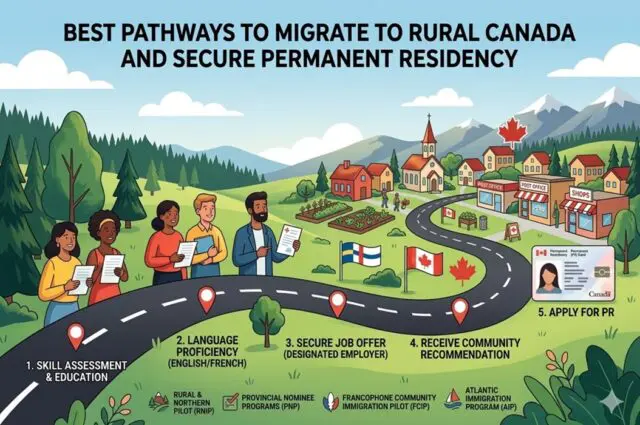
Pathways to Migrate to Rural Canada: Your Complete Guide to Permanent Residency
Canada continues to welcome skilled immigrants to help address labor shortages, particularly in smaller towns and rural communities. If you’ve been dreaming of living and working in Canada, rural immigration programs provide one of the most practical and accessible routes to Canadian Permanent Residency (PR).
For many Kenyans and other skilled professionals in the diaspora, these programs offer excellent employment opportunities, affordable living, and a faster pathway to becoming a permanent resident.
This guide explains the three major immigration pathways available for those interested in relocating to rural Canada.
Why Canada Needs Immigrants in Rural Communities
Many rural communities across Canada face aging populations and significant labor shortages across industries such as:
- Healthcare
- Construction
- Agriculture
- Manufacturing
- Hospitality
- Transportation
- Skilled Trades
- Information Technology
- Education
To fill these vacancies, both the federal government and provincial governments have introduced immigration programs specifically targeting foreign workers willing to settle outside major cities.
1. Rural Community Immigration Pilot (RCIP)
The Rural Community Immigration Pilot (RCIP) is one of Canada’s newest federal immigration initiatives designed to attract skilled foreign workers to smaller communities experiencing workforce shortages.
Unlike traditional immigration programs, RCIP connects qualified immigrants directly with employers located in designated rural communities.
Successful applicants can eventually obtain Canadian Permanent Residency.
Participating RCIP Communities
Current participating communities include:
British Columbia
- Vernon
- West Kootenay
Alberta
- Claresholm
- Saskatchewan
- Moose Jaw
Manitoba
- Brandon
- Altona/Rhineland
Ontario
- North Bay
- Greater Sudbury
- Timmins
- Sault Ste. Marie
- Thunder Bay
Each community identifies local labor shortages and works closely with employers to recruit international talent.
RCIP Eligibility Requirements
To qualify for the Rural Community Immigration Pilot, applicants generally must meet the following requirements:
1. Obtain a Job Offer
Applicants must secure a full-time, permanent job offer from a designated employer participating in the RCIP.
2. Relevant Work Experience
Most applicants need:
- At least one year (1,560 hours) of continuous work experience
- Experience gained within the last three years
- Experience relevant to the offered position
3. Language Requirements
Applicants must meet minimum language standards by completing an approved English or French language examination.
Examples include:
- IELTS
- CELPIP
- TEF Canada
The required score depends on the occupation.
4. Educational Requirements
Applicants must have either:
- A Canadian educational credential
or
- A foreign diploma evaluated through an Educational Credential Assessment (ECA)
5. Settlement Funds
Unless already working legally in Canada, applicants must demonstrate sufficient financial resources to support themselves and accompanying family members after arrival.
How the RCIP Application Process Works
The application process generally follows these steps:
Step 1
Search for employment opportunities with designated employers within participating RCIP communities.
Step 2
Receive a qualifying job offer.
Step 3
Obtain a community recommendation from the participating municipality.
Step 4
Submit your Permanent Residency application to Immigration, Refugees and Citizenship Canada (IRCC).
2. Provincial Nominee Programs (PNPs)
Nearly every Canadian province operates its own Provincial Nominee Program (PNP).
Many provinces have created immigration streams specifically designed for smaller communities experiencing labor shortages.
Receiving a provincial nomination significantly improves your chances of becoming a permanent resident.
Popular Rural Provincial Nominee Programs
Alberta Rural Renewal Stream
This program allows designated rural Alberta communities to recruit skilled foreign workers directly.
Employers partner with local communities to identify labor needs and recommend eligible candidates.
Ontario Immigrant Nominee Program (OINP)
Ontario offers several employer-driven streams that support hiring skilled workers outside the Greater Toronto Area (GTA).
Smaller cities often experience higher demand for:
- Nurses
- Truck drivers
- Welders
- Industrial workers
- Healthcare aides
- Skilled trades
- Other Provincial Opportunities
Other provinces also operate regional immigration initiatives, including:
- Saskatchewan
- Manitoba
- British Columbia
- Nova Scotia
- New Brunswick
Applicants should regularly monitor provincial immigration websites for updates and community-specific opportunities.
3. Express Entry with Provincial Nomination
Canada’s Express Entry system manages applications for several federal immigration programs.
Although Express Entry is competitive, receiving a Provincial Nominee Program nomination adds an additional 600 Comprehensive Ranking System (CRS) points.
This virtually guarantees an Invitation to Apply (ITA) for Canadian Permanent Residency during the next Express Entry draw.
Benefits of Living in Rural Canada
Many newcomers discover that rural Canada offers numerous advantages over larger metropolitan areas.
Benefits include:
- Lower housing costs
- Reduced cost of living
- Less traffic congestion
- Strong community support
- Better work-life balance
- Excellent schools
- Safer neighborhoods
- Faster access to employment
Many employers also provide relocation assistance, onboarding support, and settlement services for newcomers.
Occupations Currently in High Demand
The greatest opportunities often exist in:
- Registered Nurses
- Personal Support Workers
- Caregivers
- Truck Drivers
- Electricians
- Plumbers
- Carpenters
- Welders
- Heavy Equipment Operators
- Mechanics
- Software Developers
- Manufacturing Workers
- Food Processing Workers
- Hospitality Staff
- Agricultural Workers
Demand varies by province and community.
Tips for a Successful Application
To improve your chances of approval:
- Gain relevant work experience before applying.
- Improve your English or French language scores.
- Obtain an Educational Credential Assessment (ECA).
- Tailor your resume to Canadian standards.
- Apply only for jobs with designated employers.
- Demonstrate a genuine intention to settle in the community.
Final Thoughts
Canada continues to expand immigration opportunities for skilled workers willing to live outside major urban centers. Programs like the Rural Community Immigration Pilot (RCIP), Provincial Nominee Programs (PNPs), and Express Entry provide realistic pathways for qualified immigrants to secure employment and obtain Canadian Permanent Residency.
For Kenyans and other diaspora communities seeking a fresh start abroad, rural Canada offers excellent career opportunities, welcoming communities, and a high quality of life. Preparing your qualifications, improving your language skills, and targeting designated employers can significantly increase your chances of success.
Whether you are a healthcare professional, skilled tradesperson, truck driver, IT specialist, or hospitality worker, rural Canada may be your gateway to building a successful future in one of the world’s most immigrant-friendly countries.





Interested
Can you share with me the application form
Am interested to be an agricultural worker,manufacturing worker,Logistic field Clearing and fowarding