

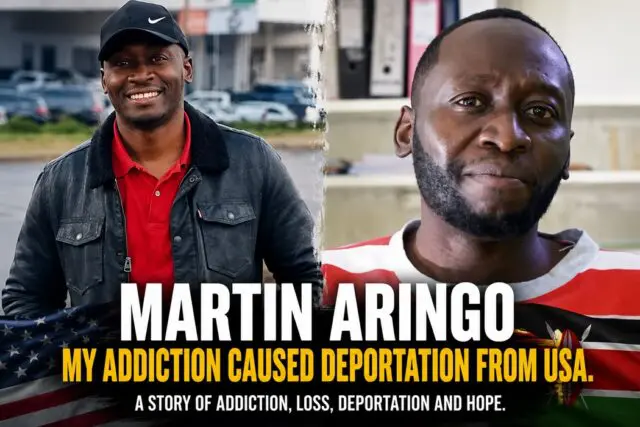
Martin Aringo’s Deportation Story: Addiction, Deportation, and a Second Chance
Martin Aringo’s life story is a powerful reminder that addiction can have life-altering consequences—not only for an individual’s health but also for immigration status, career prospects, and family life.
The Kenyan-born former U.S. Navy serviceman has publicly shared how alcohol addiction destroyed a promising military career in the United States before eventually leading to his deportation to Kenya. Today, however, Aringo says he is sober and hopes his experience will encourage others to seek help before addiction takes control of their lives.
For many Kenyans living abroad, his story highlights an often-overlooked reality: personal decisions can have serious immigration consequences that extend far beyond criminal penalties.
A Promising Start in the United States
Martin Aringo relocated to the United States as a teenager after his family successfully immigrated through the U.S. Diversity Visa (Green Card Lottery) program.
Like thousands of Kenyan immigrants every year, his family moved with hopes of better education, career opportunities, and long-term financial stability.
After settling in Texas, Aringo initially pursued nursing before deciding to enlist in the U.S. Navy—a career path that offered stability, benefits, and an opportunity to serve his adopted country.
His future appeared bright.
Unfortunately, addiction would soon derail everything.
Alcohol Addiction Changed Everything
According to Aringo, alcohol gradually became a destructive force in his life.
Repeated alcohol-related incidents eventually resulted in disciplinary and legal problems that ended his military career.
The consequences extended beyond employment.
Because certain criminal offenses can trigger immigration enforcement—even for lawful permanent residents—his legal troubles eventually attracted the attention of U.S. immigration authorities.
Despite efforts by his family to help him remain in America, Aringo was ultimately deported to Kenya.
His experience illustrates how addiction can create a chain reaction affecting every aspect of a person’s life.
Immigration Consequences of Criminal Offenses
Immigration attorneys frequently warn that non-U.S. citizens—including Green Card holders—are not immune from deportation.
Under U.S. immigration law, certain criminal convictions involving alcohol, drugs, violence, fraud, or repeated offenses may place lawful permanent residents at risk of removal proceedings, depending on the nature and circumstances of each case.
Each immigration case is unique, and legal outcomes vary significantly based on an individual’s record, immigration history, and applicable laws. Experts consistently advise immigrants facing criminal charges to seek both criminal defense and immigration legal counsel as early as possible.
For immigrants, a criminal conviction may affect:
- Permanent resident status
- Naturalization eligibility
- International travel
- Employment opportunities
- Military service
- Future immigration petitions for family members
Returning to Kenya Was Not the End of the Battle
Deportation marked another difficult chapter in Aringo’s life.
He has openly admitted that addiction continued affecting him after returning to Kenya.
He struggled with broken relationships, emotional pain, and a loss of identity after leaving behind the life he had built in America.
Aringo has also publicly disclosed that he lives with bipolar disorder.
Mental health professionals note that untreated mental health conditions can increase vulnerability to substance abuse, while addiction itself can worsen psychiatric symptoms.
His willingness to discuss both addiction and mental illness has resonated with many people facing similar struggles.
Choosing Recovery
Today, Martin Aringo says he is sober.
Rather than hiding his past, he has chosen to speak publicly about his mistakes in hopes of helping others avoid similar outcomes.
His message is simple:
Seek professional help early.
Recovery is possible.
There is hope after addiction.
His story demonstrates that while addiction can destroy opportunities, it does not have to define a person’s future forever.
Kenyan Diaspora Impact
Martin Aringo’s experience carries important lessons for the Kenyan diaspora community worldwide.
Many Kenyans living in the United States, Canada, the United Kingdom, Australia, and Europe have built successful careers in healthcare, education, engineering, technology, transportation, and the military.
However, immigration experts consistently caution that maintaining legal status involves more than employment and documentation. Personal conduct, criminal records, and compliance with local laws can significantly affect an immigrant’s future.
Community organizations serving Kenyans abroad have increasingly emphasized mental health awareness, addiction counseling, and peer support as critical resources for immigrants facing personal challenges far from their families.
Aringo’s willingness to share his experience may encourage more diaspora members to seek assistance before addiction leads to irreversible consequences.
Expert Opinion
Mental health professionals emphasize that addiction is a chronic medical condition rather than simply a lack of willpower.
According to the American Society of Addiction Medicine (ASAM), substance use disorders affect brain function and behavior, often requiring comprehensive treatment that may include counseling, behavioral therapy, medication, and long-term recovery support.
Immigration attorneys also advise immigrants to seek immediate legal advice whenever criminal charges arise because even offenses that appear minor can carry serious immigration consequences.
Early intervention—both medically and legally—can significantly improve outcomes.
Statistics Highlight the Growing Need
Several studies illustrate why addiction and mental health remain major public health concerns:
- The World Health Organization (WHO) estimates that harmful alcohol use contributes to approximately 3 million deaths globally each year, representing about 5% of all deaths worldwide.
- The U.S. National Institute on Alcohol Abuse and Alcoholism (NIAAA) reports that millions of American adults experience Alcohol Use Disorder annually.
- Mental health experts note that individuals living with bipolar disorder face a significantly higher risk of developing substance use disorders compared to the general population.
- Research consistently shows that early treatment improves long-term recovery outcomes and reduces relapse rates.
These figures reinforce the importance of early intervention and access to professional support.
A Message of Hope
Martin Aringo’s story is not only about addiction or deportation.
It is ultimately about redemption.
His decision to speak openly about his mistakes may inspire someone currently battling alcohol addiction, depression, or mental illness to seek help before it is too late.
For members of the Kenyan diaspora, his journey also serves as a reminder that protecting one’s immigration status includes protecting one’s health, mental well-being, and future.
Recovery is possible.
Second chances are real.
And asking for help could become the most important decision someone ever makes.