

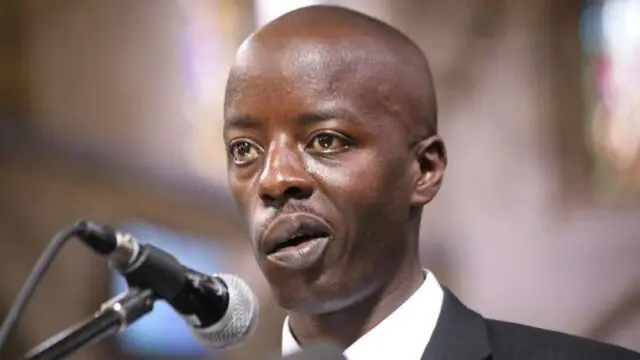
Raila Odinga Junior has spoken publicly for the first time about a lifelong medical condition that many have misunderstood for years. In a candid revelation, he clarified that the facial paralysis he experiences was not the result of an accident or Bell’s Palsy, as many have speculated, but rather due to a rare condition called acoustic neuroma—a noncancerous tumor that affects the nerve connecting the ear to the brain.
What Is Acoustic Neuroma?
Acoustic neuroma, also known as vestibular schwannoma, is a rare, benign tumor that develops on the vestibulocochlear nerve, which controls hearing and balance. In Raila Odinga Jr.’s case, the tumor developed when he was a child in 1985, impacting the facial nerve on the right side of his face and causing permanent facial paralysis.
“It’s something that has affected me throughout my life,” said Raila Jr., describing how the condition has shaped his journey since childhood.
Not Bell’s Palsy: Raila Odinga Jr. Clarifies Misconceptions
For years, many people assumed that Raila Jr.’s facial asymmetry was caused by Bell’s Palsy, a temporary condition that causes sudden weakness in the facial muscles. However, he was keen to dispel this myth.
“People always assume it’s Bell’s Palsy, but it’s not,” he clarified. “Mine is caused by an acoustic schwannoma, which is a form of acoustic neuroma.”
Unlike Bell’s Palsy, acoustic neuroma is typically non-reversible, especially when it results in long-term nerve damage, as was the case for Raila Jr.
A Genetic Link From His Mother’s Side
In sharing his story, Raila Jr. also revealed that his acoustic neuroma is believed to be genetic, inherited from his mother’s side of the family, although no other family member has exhibited similar symptoms.
Embracing the Condition and Inspiring Others
Raila Odinga Jr. has come to terms with the condition, despite the fact that current medical treatments cannot fully reverse the nerve damage caused by the tumor.
“It caused the nerve on the right side of my face to switch off, leaving my mouth slightly twisted,” he explained. “But I’ve learned to accept it.”
By speaking openly about his condition, he hopes to raise awareness, correct misinformation, and inspire others who may be living with visible or invisible medical conditions.
Why Raila Odinga Jr.’s Story Matters
Raila Jr.’s transparency shines a spotlight on rare neurological disorders like acoustic neuroma, and how early childhood medical conditions can have lasting effects. His message of resilience, self-acceptance, and advocacy for awareness resonates with many facing similar challenges.
Follow our WhatsApp Channel and X Account for news updates.