

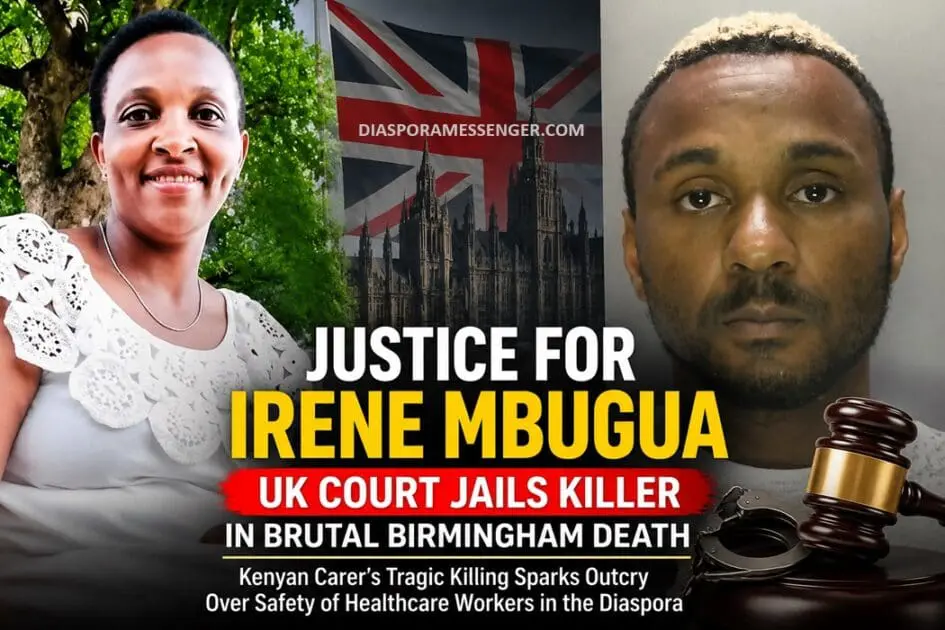
The Kenyan diaspora community in the United Kingdom is continuing to mourn the tragic death of Irene Mbugua, a Kenyan carer who was brutally killed while working in Birmingham, England. The disturbing case has drawn widespread attention from both Kenyan and British communities, renewing urgent conversations about the safety of carers and healthcare workers operating in high-risk environments.
A UK court has now sentenced David Walsh to life imprisonment for the killing of the 46-year-old Kenyan woman in a case described by the judge as “brutal” and “without motive.”
Irene Mbugua Found Dead in Birmingham Home
Irene Mbugua was found dead inside a house on Markby Road in Winson Green, Birmingham, on June 23, 2025, after family and friends raised concerns when they could no longer reach her.
At the time of her death, Irene was working as a professional carer for David Walsh, a man reportedly suffering from severe mental health problems. According to investigators, Irene suffered serious head and facial injuries during a violent attack inside the residence.
Police investigations later revealed that after the killing, Walsh used Irene’s bank card for shopping before authorities eventually discovered her body.
The shocking details deeply affected many Kenyans living in the UK, especially healthcare workers and carers who often work alone while supporting vulnerable individuals.
CCTV Footage Helped Detectives Solve the Case
Detectives relied on CCTV footage, witness statements, and movements linked to the property to piece together the timeline surrounding Irene’s disappearance.
Walsh was later arrested and charged in connection with the killing. During court proceedings, he admitted manslaughter on grounds of diminished responsibility. He also pleaded guilty to several assaults on emergency workers.
During sentencing at Birmingham Crown Court, the judge condemned the violent killing and ordered Walsh to serve a life sentence with a minimum of 12 years before he can be considered for release.
The court noted the devastating impact Irene’s death has had on her family, friends, and the wider Kenyan diaspora community.
Kenyan Diaspora Community Calls for Better Protection for Carers
Following the sentencing, Irene Mbugua’s family described her death as preventable and called for stronger protection measures for carers and healthcare workers.
Many carers across the UK often work independently inside private homes, sometimes in unpredictable and dangerous situations without adequate security support.
The tragic death of Irene has reignited conversations about:
- Safety protocols for live-in carers
- Mental health risk assessments for vulnerable clients
- Emergency response systems for healthcare workers
- Employer responsibility in protecting carers
- Support structures for migrant healthcare workers
Kenyans living abroad have also continued to demand justice and accountability while honoring Irene’s memory as a hardworking woman who traveled abroad seeking better opportunities for herself and her loved ones.
Growing Concerns Among Kenyan Healthcare Workers Abroad
The UK remains one of the top destinations for Kenyan healthcare professionals and carers seeking employment opportunities overseas. Thousands of Kenyan nurses, caregivers, and support workers are currently employed across Britain’s healthcare and social care sectors.
However, Irene Mbugua’s death has highlighted the hidden risks many diaspora workers face daily while carrying out essential caregiving duties.
Community leaders and advocates are now urging employers, healthcare agencies, and government authorities to improve workplace safety measures and provide better mental health crisis management systems for carers working alone.
Remembering Irene Mbugua
Friends and relatives continue to remember Irene Mbugua as a caring, hardworking, and compassionate woman whose life was tragically cut short while serving others.
Her death has left a painful gap within the Kenyan diaspora community in the UK and among all who knew her personally.
As the case concludes in court, many hope Irene’s story will lead to meaningful reforms that help protect carers and healthcare workers from similar tragedies in the future.