
Former Kenyan Athlete Appeals After Receiving 80-Year Prison Sentence in Mexico
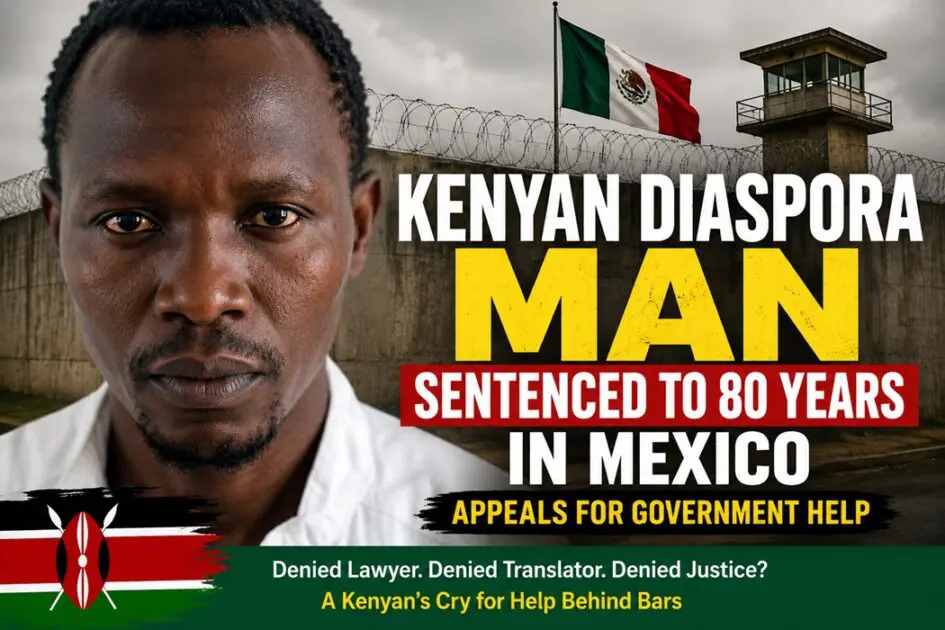
A Kenyan man serving an 80-year prison sentence in Mexico is pleading with the Kenyan government to intervene, claiming he was denied basic legal protections during his criminal trial.
Rerimoi Barsitei, a former athlete from Baringo County, says he never received legal representation or translation services despite repeatedly requesting assistance. According to Barsitei, he unknowingly accommodated individuals who were later identified as criminals and insists he had no involvement in the offences that resulted in his conviction.
Now imprisoned thousands of miles from home, Barsitei is appealing to Kenyan authorities and the Kenyan diplomatic mission responsible for Mexico to help him seek justice and review his case.
His appeal has renewed debate about the level of consular support available to Kenyans facing criminal charges abroad, especially in countries where language barriers and unfamiliar legal systems create additional challenges.
Claims of an Unfair Trial
Barsitei alleges that his constitutional and human rights were violated throughout the judicial process.
According to his account, he:
- Was not provided with a lawyer during critical court proceedings.
- Did not receive a qualified translator despite not speaking Spanish fluently.
- Repeatedly sought help from Kenyan diplomatic officials without success.
- Was convicted despite maintaining that he had no knowledge of the criminal activities allegedly committed by people he had accommodated.
He continues to maintain his innocence and hopes that diplomatic intervention could lead to a review of his case or an appeal within the Mexican legal system.
Why the Kenyan Embassy in Washington Is Involved
Kenya does not maintain an embassy in every country around the world.
As a result, Kenyan diplomatic missions accredited to multiple countries often handle consular matters for citizens outside their immediate host nation. Barsitei is now calling upon the Kenyan Embassy responsible for Mexico to assist him in obtaining legal support and ensuring his rights are protected.
Consular officials generally cannot overturn court decisions or interfere with another country’s judicial system. However, they may be able to:
- Verify the welfare of imprisoned citizens.
- Facilitate communication with family members.
- Help locate legal representation.
- Monitor whether international standards of due process are being observed.
- Advocate for fair treatment under international diplomatic agreements.
Challenges Facing Kenyans Arrested Abroad
Thousands of Kenyans live, work and study across North America, Europe, Asia, the Middle East and Latin America.
When diaspora members become involved in criminal investigations overseas, they often face significant obstacles, including:
- Language barriers.
- Limited understanding of foreign legal systems.
- High legal costs.
- Difficulty contacting family members.
- Lack of immediate access to Kenyan consular assistance.
- Immigration and residency complications.
These challenges can make defending oneself considerably more difficult, particularly when the accused lacks financial resources.
Immigration Implications for Kenyans Abroad
Even where criminal allegations do not lead to conviction, arrests abroad can have long-term immigration consequences.
Immigration experts note that criminal convictions may affect:
- Future visa applications.
- Permanent residency eligibility.
- International travel.
- Deportation proceedings.
- Citizenship applications in other countries.
For diaspora members, understanding local laws and obtaining immediate legal counsel following an arrest is critical.
Expert Opinion: Legal Representation Is Essential
International human rights advocates emphasize that access to legal counsel and interpretation services is a cornerstone of a fair criminal justice system.
Legal experts note that defendants who cannot understand court proceedings because of language barriers are significantly disadvantaged. Effective legal representation and competent translation help ensure defendants understand the charges against them, communicate with the court, and participate meaningfully in their defense.
Where these safeguards are absent, appellate courts in some jurisdictions may review whether the trial met applicable legal standards.
Growing Number of Kenyans Facing Legal Difficulties Overseas
The Kenyan diaspora has expanded rapidly over the past decade.
Government data indicates that thousands of Kenyans now live and work abroad, contributing billions of shillings annually through remittances that remain one of Kenya’s largest sources of foreign exchange.
While the overwhelming majority are law-abiding, a small number become entangled in criminal investigations overseas due to:
- Employment disputes.
- Immigration violations.
- Drug trafficking allegations.
- Financial crimes.
- Human trafficking networks.
- Misunderstanding local laws.
- Association with criminal suspects.
These cases often require coordinated diplomatic engagement between Kenya and the host country.
Calls for Stronger Consular Protection
Barsitei’s case has prompted renewed calls for stronger protection of Kenyan citizens overseas.
Diaspora organizations have urged the government to:
- Expand emergency legal assistance for Kenyans abroad.
- Improve response times for detained citizens.
- Increase awareness of consular services.
- Strengthen partnerships with international legal aid organizations.
- Improve communication between embassies and affected families.
Advocates argue that while diplomatic missions cannot interfere with foreign courts, they play an essential role in ensuring Kenyan citizens receive humane treatment and access to due process.
What Happens Next?
Barsitei hopes the Kenyan government will help secure legal assistance that could enable him to challenge his conviction through Mexico’s appellate process.
Whether diplomatic intervention ultimately changes the outcome remains uncertain. However, his case has become another reminder of the complex legal realities many migrants face when living abroad.
For the Kenyan diaspora, the case underscores the importance of understanding local laws, maintaining legal immigration status, and seeking qualified legal advice immediately when confronted with criminal allegations.
Conclusion
The case of Rerimoi Barsitei highlights the difficult circumstances that can arise when Kenyans encounter foreign criminal justice systems. While Mexican courts retain jurisdiction over criminal proceedings within their borders, concerns about access to legal representation and language interpretation have fueled calls for greater diplomatic engagement.
As Kenya’s global diaspora continues to grow, ensuring citizens abroad receive timely consular support and understand their legal rights will remain an increasingly important national priority.