


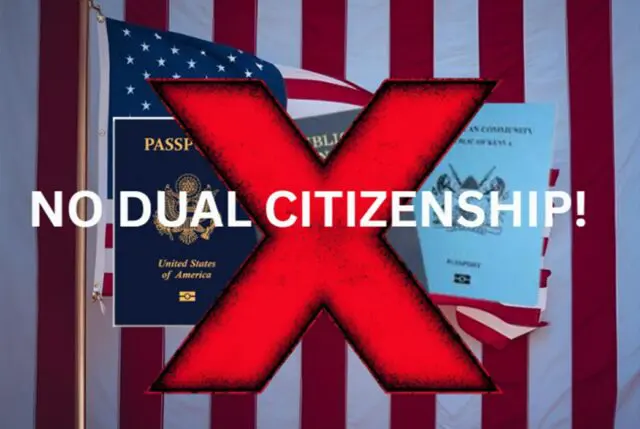
Washington, D.C. — A newly proposed bill by Bernie Moreno (R-Ohio) aims to eliminate dual citizenship for Americans, sparking a nationwide debate about identity, allegiance, and constitutional rights. The measure — titled the Exclusive Citizenship Act of 2025 — would require all U.S. citizens to owe “sole and exclusive allegiance” to the United States.
What the Bill Proposes
Under the terms of the Exclusive Citizenship Act of 2025:
- No individual could hold U.S. citizenship and citizenship of any foreign country simultaneously.
- Dual or multiple citizenships would be prohibited: obtaining citizenship in a foreign country would automatically disqualify a person from retaining U.S. citizenship.
- Americans who currently hold foreign citizenship would be given a limited time — typically one year after enactment — to either formally renounce foreign nationality or relinquish their U.S. citizenship. Failure to comply would result in automatic loss of U.S. citizenship.
- The bill tasks the U.S. Department of State and the U.S. Department of Homeland Security (DHS) with creating systems to track citizenship status, verify renunciations, and update federal records accordingly.
“I pledged an Oath of Allegiance to the United States … and ONLY to the United States of America,” Senator Moreno said in announcing the bill. “If you want to be an American — it’s all or nothing. It’s time to end dual citizenship for good.”
Potential Impact: Millions of Americans Could Be Affected
How many people might this bill impact? Because the U.S. does not require citizens to register or declare dual nationality, exact figures are unknown. Experts have estimated the number of Americans holding dual citizenship could range anywhere from 500,000 to 5.7 million.
If the law passes, many individuals — including immigrants, children of immigrants, and naturalized citizens — would face a difficult choice: relinquish foreign citizenship, or give up their U.S. citizenship. The stakes are particularly high for American families with deep international ties, dual passports, or dual-citizenship heritage.
Supporters Argue: National Loyalty and Security
Supporters of the bill argue dual citizenship can create conflicts of interest and divided loyalties. This is especially true in times of geopolitical tension. According to the text of the bill, maintaining foreign citizenship while also claiming American citizenship “could create conflicts of interest and divided loyalties.”
For Senator Moreno — himself a former dual citizen who renounced his Colombian nationality — the bill reflects his belief. He believes U.S. citizenship should mean uncompromised commitment to the United States.
Critics Warn of Constitutional, Practical, and Cultural Consequences
However, critics argue the bill may conflict with long-established constitutional precedent. In the landmark decision Afroyim v. Rusk (1967), the Supreme Court of the United States ruled that citizens cannot be deprived of their U.S. citizenship involuntarily. Only voluntary renunciation is permitted.
Opponents say forcing dual citizens to choose — or face automatic expatriation — would amount to involuntary loss of citizenship. This is a step the courts have historically rejected.
Beyond constitutional concerns, critics highlight the personal, cultural, and financial disruption for millions of dual-citizen families: loss of family ties abroad, complications for cross-border travel, and the abrupt need to renounce citizenship they may have held since birth.
What’s Next: Political, Legal, and Social Uncertainty
At this point, the bill’s future remains uncertain. It must pass both houses of Congress and survive what would likely be intense legal challenges before becoming law. Analysts suggest that even if it advances, courts may strike down key provisions as unconstitutional.
If the bill gains traction, it could trigger a nationwide wave of citizenship renunciations. This would affect not only immigrants and naturalized Americans, but also U.S.-born dual citizens who inherited foreign nationality by descent. For many, the proposed law would force a deeply personal decision: choosing between multiple identities, or losing American status altogether.
Follow our WhatsApp Channel and X Account for news updates.