
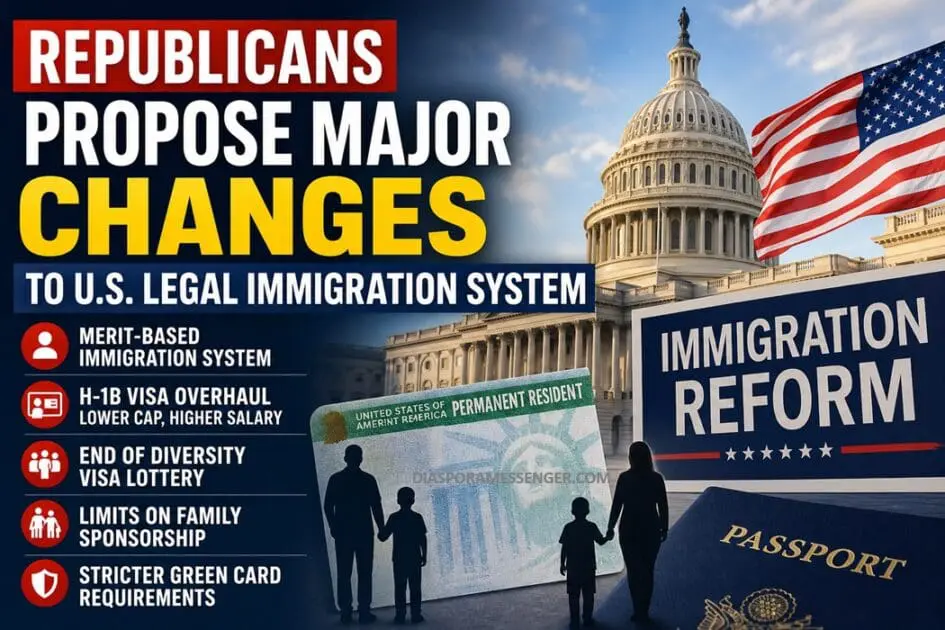
Republican lawmakers in the United States are pushing forward a series of sweeping proposals aimed at overhauling the country’s legal immigration system. The new legislative efforts, including the Americans First Immigration Act and the American Jobs First Act, seek to significantly reshape how immigrants enter and settle in the U.S.
For the Kenyan diaspora in the USA and other immigrant communities, these proposals could bring major changes to family reunification, employment-based visas, and long-term residency pathways.
Key Proposed Changes to U.S. Legal Immigration
1. Shift to a Merit-Based Immigration System
One of the most significant proposals is a transition from the current family-based immigration model to a points-based system.
Under this system, applicants would be evaluated based on:
- Educational qualifications
- English language proficiency
- Professional skills in high-demand sectors
- Job offers with competitive salaries
This shift could benefit highly skilled professionals but make it more difficult for families to reunite in the U.S.
2. Major Overhaul of H-1B Visa Program
The proposed legislation introduces strict changes to the H-1B visa program, widely used by foreign professionals in technology, healthcare, and engineering.
Key changes include:
- A three-year pause on new H-1B visas
- Reduction of the annual cap from 65,000 to 25,000
- Introduction of a minimum salary threshold ranging from $110,000 to $200,000
These changes could significantly impact immigrants working or seeking employment in high-skilled sectors, including many Kenyan professionals in America.
3. Elimination of the Diversity Visa Lottery
The proposals also seek to eliminate the Diversity Visa (DV) Lottery, which currently issues about 55,000 visas annually.
For many African immigrants, including Kenyans, the DV Lottery has been a critical pathway to U.S. residency. Its removal would limit access for applicants from countries with lower immigration rates.
4. Reduction in Family-Based Immigration (“Chain Migration”)
Republican lawmakers are also targeting what they refer to as “chain migration.”
Under the new proposals:
- Family sponsorship would be limited mainly to spouses and minor children
- Extended family categories such as siblings and adult children could be eliminated
This could significantly affect diaspora families seeking reunification.
5. Stricter Requirements for Green Card Applicants
Some proposals introduce tougher eligibility requirements for green card applicants, including:
- Expanded “good moral character” criteria
- Potential disqualification based on prior arrests—even without convictions
- Restrictions related to public benefits usage
These changes could increase scrutiny for many immigrants already living in the U.S.
Broader Immigration Reduction Goals
Overall, the proposed reforms aim to reduce legal immigration levels by up to 50%, aligning with a broader policy objective to prioritize American workers and limit foreign labor competition.
Supporters argue this will:
- Protect domestic jobs
- Increase wages for American workers
- Reduce dependency on foreign labor
Opposition and Economic Concerns
Critics, including business groups and immigration advocates, warn that the proposals could have serious economic consequences.
Concerns include:
- Labor shortages in key sectors like healthcare and technology
- Reduced innovation driven by skilled immigrants
- Negative impact on U.S. global competitiveness
Many industries rely heavily on immigrant talent, and restrictions could disrupt workforce stability.
What This Means for the Kenyan Diaspora
For Kenyans living in the United States, these proposals could have far-reaching implications:
- Reduced opportunities for family reunification
- Fewer pathways through programs like the DV Lottery
- Increased competition for skilled worker visas
- Higher eligibility thresholds for employment-based immigration
At the same time, highly skilled professionals may benefit from a merit-based system if they meet the new criteria.
Conclusion
The proposed immigration reforms mark one of the most ambitious attempts in recent years to reshape the U.S. legal immigration system. While the legislation is still under debate and may face significant political hurdles, its potential impact on immigrants—especially the Kenyan diaspora and other African communities—is substantial.
As discussions continue in Congress, immigrants and stakeholders are closely watching how these policies could redefine the future of legal immigration in the United States.