

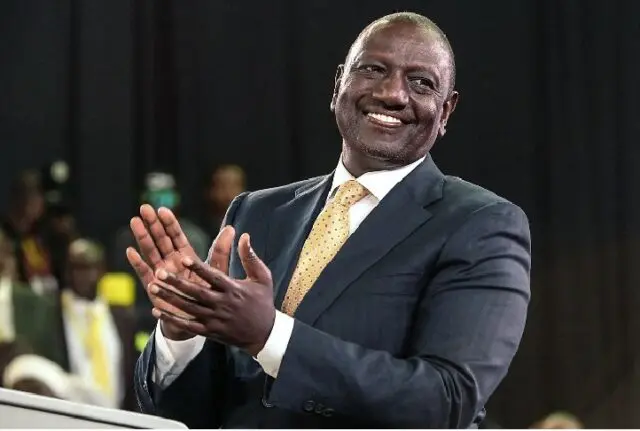
Ruto Net Worth: In the world of politics, power and wealth often go hand in hand. And when it comes to amassing fortunes, few can rival the astonishing net worth of President William Ruto.
It’s no secret that Ruto is a wealthy man, but the true extent of his wealth is truly mind-boggling.
In the realm of wealth and opulence, the story of Ruto unveils a captivating narrative of affluence and prosperity.
Recent reports have revealed that his net worth currently stands at an astounding Sh15.83 billion, making him one of the richest politicians in Kenya.
This figure is even more astounding when compared to the modest Ksh 7 billion net worth of his deputy, Rigathe Gachagua.
Comparing this illustrious figure to Gachagua’s wealth brings a fascinating twist to the narrative, showcasing the diversity in Kenya’s affluent landscape.
Ruto’s financial stature towers over Gachagua, painting a vivid picture of divergent fortunes in the world of wealth accumulation.
With such a vast disparity in wealth between the two, it raises questions about how the wealth was accumulated and what it means for the country’s political landscape.
The contrast between these two wealthy personalities not only sheds light on their success trajectories but also offers a glimpse into the diverse avenues through which individuals can amass significant wealth.
The immense wealth amassed by President William Ruto and Former Deputy President Rigathe Gachagua sheds light on their financial acumen and success in various endeavors.
Expert Opinion
President William Ruto’s reported net worth has become more than just a discussion about personal wealth—it is a reflection of the broader conversation about governance, transparency, and public confidence in leadership. In any democracy, the wealth of senior public officials naturally attracts public scrutiny because leaders are entrusted with managing public resources and making decisions that affect millions of citizens.
Having significant personal wealth is not, by itself, evidence of wrongdoing. Many political leaders accumulate wealth through business investments, farming, real estate, and other legitimate ventures before or during their political careers. However, the key issue is transparency. Citizens expect public officials to clearly disclose their assets, explain the sources of their wealth where required by law, and avoid conflicts of interest.
The comparison between President William Ruto and former Deputy President Rigathi Gachagua also highlights that financial success among politicians can vary widely depending on their business interests, investments, and career paths. Rather than focusing solely on who is richer, the more important public debate should center on accountability, ethical leadership, compliance with asset declaration laws, and ensuring that public office is never used for personal enrichment.
Ultimately, strong institutions—not speculation—are the best safeguard for public trust. Independent oversight bodies, transparent procurement systems, effective anti-corruption agencies, and regular asset disclosures are essential in ensuring that political leadership remains accountable. Regardless of a leader’s personal fortune, the true measure of leadership lies in improving citizens’ lives, strengthening institutions, and delivering economic opportunities that benefit the entire nation.
Conclusion
President William Ruto’s reported net worth continues to generate significant public interest, reflecting the close relationship between wealth, leadership, and public accountability in Kenya. The substantial difference between Ruto’s reported fortune and that of former Deputy President Rigathi Gachagua underscores the varying financial journeys of the country’s top political leaders.
As discussions around the wealth of public officials continue, many Kenyans are calling for greater transparency regarding the sources of such fortunes and the role of asset declarations in promoting accountability. Ultimately, public trust is strengthened when leaders demonstrate openness about their financial interests while maintaining the highest standards of integrity in public service.
Whether viewed as a symbol of entrepreneurial success or a subject of public scrutiny, President William Ruto’s wealth remains a key topic in Kenya’s political and economic discourse, highlighting the ongoing debate over leadership, accountability, and economic opportunity.
About the Author
Isaac Mbugua is a Senior Journalist and Digital News Writer at Diaspora Messenger News Media, specializing in Kenyan politics, diaspora affairs, immigration, and current affairs.