


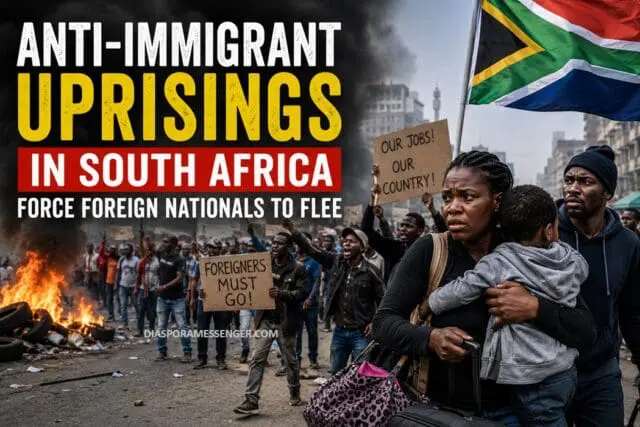
Anti-immigrant protests and violent attacks in South Africa have escalated dramatically in recent weeks, forcing hundreds of foreign nationals to flee for safety as tensions rise across major cities including Johannesburg, Pretoria, and Durban.
The unrest, which intensified in late April and early May 2026, has sparked fear among immigrant communities from across Africa, particularly Nigerians, Mozambicans, Zimbabweans, Ethiopians, Somalis, Ghanaians, and Kenyans living and working in South Africa. Reports indicate that businesses owned by foreign nationals have been looted, homes attacked, and individuals harassed in what many observers are calling another dangerous wave of xenophobic violence in the country.
Foreign Nationals Living in Fear
Many immigrants say they no longer feel safe remaining in South Africa as mobs continue targeting neighborhoods and businesses associated with foreigners. Several families have reportedly abandoned their homes, while others are seeking emergency evacuation assistance from their embassies.
According to reports, more than 130 Nigerians had formally requested repatriation assistance by May 4, 2026, amid growing concerns over their safety. Similar fears are spreading among Kenyan and Mozambican nationals, with some preparing to leave the country voluntarily before the violence worsens.
Witnesses describe chaotic scenes in parts of Johannesburg and Pretoria where shops owned by immigrants were vandalized and looted during demonstrations against illegal immigration.
Protesters Blame Immigrants for Economic Hardships
The protests have largely been fueled by frustrations over South Africa’s struggling economy, rising unemployment, crime, and pressure on public services. Protesters accuse undocumented immigrants of taking jobs, increasing criminal activity, and straining healthcare and housing systems.
In some demonstrations, groups of protesters armed with sticks, machetes, and other melee weapons marched through communities demanding the immediate removal of foreign nationals from South Africa.
Videos circulating on social media show crowds chanting anti-immigrant slogans while targeting businesses believed to be owned by non-South Africans.
South African Government Under Pressure
South African President Cyril Ramaphosa condemned the attacks and called for calm, warning that violence against foreign nationals damages the country’s reputation and undermines African unity.
However, many protesters claim the government has failed to adequately address undocumented immigration and worsening economic conditions. Critics argue that authorities have been slow to respond to growing tensions before the situation escalated into violence.
Security forces have increased deployments in affected areas, but fears remain high as demonstrations continue in several parts of the country.
Diplomatic Tensions Emerging Across Africa
The unrest has also triggered concern across the African continent, with countries such as Nigeria and Ghana issuing warnings to their citizens living in South Africa.
Some governments are exploring evacuation and protection measures for affected nationals, raising fears of diplomatic tensions between South Africa and other African nations.
Community leaders and human rights organizations are urging African governments to work together to prevent further violence and protect vulnerable immigrant populations.
Kenya Diaspora Community Watching Closely
For the Kenyan diaspora community, the situation has raised serious concerns about the safety and stability of Kenyans living and working in South Africa. Kenyan-owned businesses and professionals in sectors such as transport, retail, hospitality, and education are reportedly monitoring developments carefully.
Diaspora organizations are calling for calm while urging affected individuals to stay alert, avoid protest hotspots, and remain in contact with local authorities and embassy officials.
A History of Xenophobic Violence in South Africa
This latest unrest follows previous major outbreaks of anti-immigrant violence in South Africa in 2008, 2015, and 2019. Those earlier attacks left dozens dead, displaced thousands of foreign nationals, and caused millions of dollars in property damage.
Analysts say the recurring tensions highlight deeper social and economic challenges facing South Africa, including high youth unemployment, poverty, inequality, and frustration over slow economic growth.
As demonstrations continue and fears of additional attacks grow, many foreign nationals remain uncertain about their future in one of Africa’s largest economies.
The situation remains volatile, with authorities and international observers closely monitoring developments across the country.