



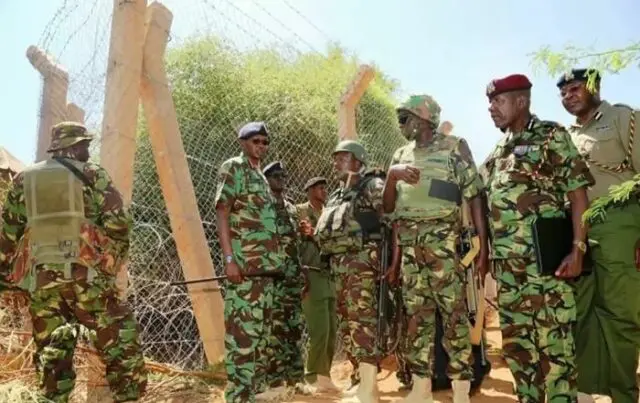
Kenya’s Border Security Wall with Somalia: Strengthening National Security Amid Ongoing Terror Threats
Kenya’s decision to construct a security barrier along its border with Somalia remains one of the country’s most significant counterterrorism initiatives. The project was launched following a series of deadly attacks attributed to the Somalia-based militant group Al-Shabaab, which has repeatedly targeted civilians, security personnel, and critical infrastructure inside Kenya.
The border security project was designed to curb illegal cross-border movement, disrupt terrorist infiltration routes, and enhance surveillance along one of East Africa’s most porous frontiers.
Why Kenya Decided to Build the Border Wall
The Kenyan government announced plans to build a 700-kilometer security barrier stretching along the Kenya-Somalia border after an increase in terrorist attacks linked to Al-Shabaab.
Government officials argued that strengthening physical border security would make it more difficult for militants, smugglers, and other criminal networks to move between Somalia and Kenya.
Although many initially imagined a massive concrete wall, the actual infrastructure consists primarily of:
- Reinforced steel posts
- Heavy wire mesh fencing
- Multiple layers of barbed wire
- Electrified fencing in designated sections
- Security trenches alongside portions of the barrier
- Access roads for border patrol operations
The design focuses on delaying unauthorized crossings while allowing Kenyan security agencies additional time to detect and respond to potential threats.
Security Officials Inspect Construction Progress
During the construction phase, senior government officials, including former Inspector General of Police Joseph Boinnett, inspected sections of the barrier to monitor progress.
The project formed part of Kenya’s broader border management strategy, combining physical infrastructure with enhanced patrols by the Kenya Defence Forces (KDF), the National Police Service, and border surveillance technology.
The Al-Shabaab Threat
Kenya has experienced numerous terrorist attacks since deploying its military into Somalia in 2011 under Operation Linda Nchi, later integrated into the African Union peacekeeping mission.
Among the deadliest attacks include:
- Westgate Shopping Mall attack (2013) – 67 people killed.
- Garissa University attack (2015) – 147 people killed, most of them university students.
- DusitD2 Complex attack (2019) – 21 people killed.
- Numerous attacks targeting security personnel in Mandera, Lamu, Wajir, and Garissa counties.
The security barrier was introduced as one element of Kenya’s long-term strategy to reduce cross-border terrorist infiltration.
Border Security and Immigration Implications
Beyond counterterrorism, the Kenya-Somalia border wall has significant immigration implications.
The project seeks to:
- Reduce illegal border crossings.
- Strengthen immigration enforcement.
- Combat human trafficking networks.
- Limit cross-border smuggling.
- Improve customs and border management.
- Enhance verification of travelers entering Kenya.
Security experts note that while physical barriers can deter unauthorized crossings, they are most effective when combined with intelligence gathering, community policing, modern surveillance technology, and regional cooperation.
Expert Opinion
Security analysts generally agree that border barriers alone cannot eliminate terrorism.
Experts emphasize that successful counterterrorism requires a comprehensive strategy that includes:
- Intelligence sharing.
- Regional military cooperation.
- Community engagement.
- Counter-radicalization programs.
- Economic development in border regions.
- Improved refugee and immigration management.
Many also point out that Kenya continues working closely with regional partners through the African Union and neighboring countries to combat extremist networks operating across East Africa.
Kenyan Diaspora Impact
Although the border wall is primarily a domestic security measure, it carries important implications for the Kenyan diaspora.
Increased National Security
Many Kenyans living abroad have expressed support for measures that improve security at home, as terrorism affects tourism, investment, and economic confidence.
Travel Confidence
Enhanced border management may contribute to safer travel for diaspora members returning to Kenya for holidays, family visits, and business investments.
Investment Environment
Security remains one of the key considerations for diaspora investors. Improved border security can help strengthen investor confidence by reducing security risks in affected regions.
Regional Stability
A more secure Kenya contributes to stability within East Africa, supporting trade, cross-border commerce, and long-term economic growth that benefits citizens both at home and abroad.
Border Security by the Numbers
According to publicly available government and international security reports:
- Kenya and Somalia share a border of approximately 700 kilometers (435 miles).
- Kenya has experienced dozens of major Al-Shabaab attacks since 2011.
- The Garissa University attack claimed 147 lives, making it one of the deadliest terrorist attacks in Kenya’s history.
- Thousands of Kenyan security officers continue to patrol the northeastern border region as part of ongoing counterterrorism operations.
Looking Ahead
The Kenya-Somalia border wall remains part of a broader national security strategy rather than a standalone solution. As security challenges continue to evolve, Kenya is increasingly investing in technology, intelligence-led policing, regional partnerships, and enhanced immigration controls alongside physical border infrastructure.
For the Kenyan diaspora, developments in national security are closely tied to confidence in returning home, investing in local communities, and maintaining strong connections with Kenya’s economic growth.





Good job, Mr. President! Glad to see that the nation’s security has a backbone. Children should never be allowed to be victims of political or even cultural wars since they are innocent and anyone who harms them purposely will not only be held to account by earthly governments but the One who watches over the affairs of men and established nations and governments to protect the people living within their borders.